How to Recreate a High-End Editorial Portrait Using a Single AI Prompt
How to Recreate a High-End Editorial Portrait Using a Single AI Prompt
Creating a powerful editorial portrait no longer requires a full production team, rented studio, or expensive photography gear. With the right AI prompt and a clear artistic vision, you can reproduce a professional, magazine-worthy image using your own photo as the foundation.
This guide breaks down how to use one detailed prompt to recreate a refined corporate editorial scene—while maintaining realism, elegance, and visual authority. You’ll learn why each element of the prompt matters, how it improves output quality, and how you can adapt the technique for branding, portfolios, or professional profiles.
Why This Prompt Works So Well for Editorial AI Portraits
The strength of this prompt lies in its precision. Instead of vague descriptions, it defines:
- Composition
- Pose and posture
- Lighting behavior
- Wardrobe symbolism
- Emotional expression
- Editorial intent
When you guide an AI with this level of structure, you reduce randomness and gain creative control.
You’re not asking the model to imagine freely—you’re instructing it to reconstruct a visual narrative using your image as a base.
Understanding the Scene: Composition and Framing
A strong editorial image starts with composition.
In this prompt, you instruct the AI to show:
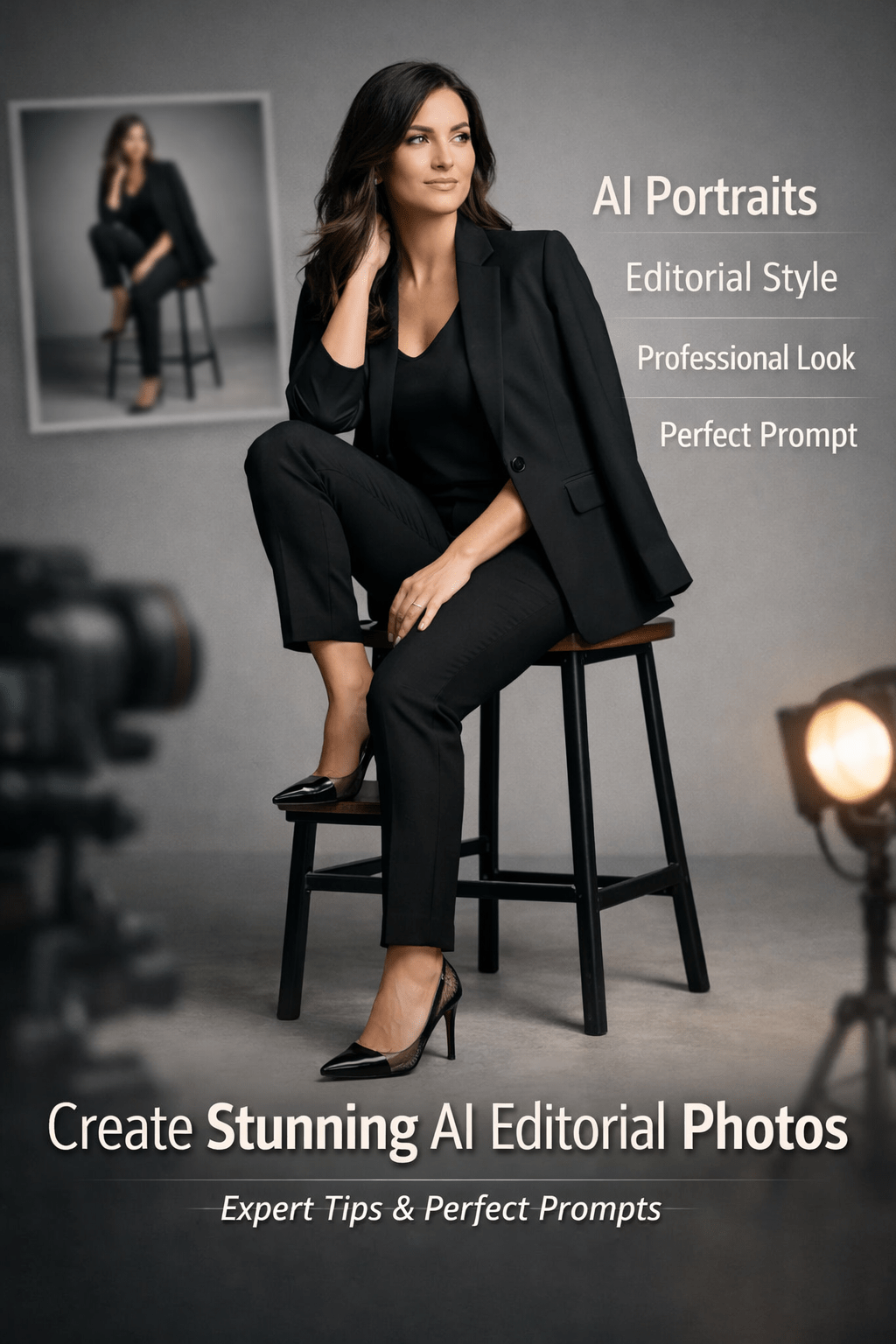
- A full-body portrait
- A high wooden stool with black metal structure
- A minimalist studio environment
- A neutral gray background with subtle gradient
This setup mirrors what fashion and corporate photographers use to highlight posture and presence without visual noise.
Why full-body framing matters
Full-body shots communicate authority and balance. When the camera captures your entire posture, the image feels intentional rather than casual—perfect for professional branding.
Pose and Body Language: Subtle Power Signals
The pose described in the prompt is not accidental.
You specify:
- One leg bent and supported on the stool step
- The other leg grounded with elegance
- High heels with translucent details
This creates a visual triangle that conveys confidence, stability, and control.
From a psychological perspective, grounded poses signal leadership. The AI translates this into an image that feels composed and editorial rather than stiff.
Wardrobe Choice: Visual Authority Through Styling
Your prompt emphasizes an all-black outfit, which is a strategic decision.
The outfit includes:
- Structured blazer resting on the shoulders
- Tailored pants
- Minimal black blouse
Black clothing in editorial portraits represents:
- Professionalism
- Power
- Timeless style
By describing structure and fit, you help the AI render fabric texture realistically, avoiding flat or artificial clothing results.
Hair and Facial Expression: Controlled, Not Cold
Editorial portraits succeed when emotion is restrained but present.
That’s why the prompt specifies:
- Hair loose and aligned over the shoulders
- Facial expression calm and confident
- Gaze slightly off-camera
This combination creates a cinematic neutrality—you appear thoughtful, self-assured, and composed, without looking staged.
AI models respond exceptionally well to emotional cues like these when they are clearly written.
Lighting: The Hidden Factor Behind Realism
Lighting is often the difference between an image that looks artificial and one that feels photographic.

This prompt uses:
- Studio lighting
- Soft directional light
- Balanced contrast
- Gentle shadows
This setup mimics professional editorial lighting, where shadows sculpt the face instead of flattening it.
When you instruct the AI to enhance fabric texture and facial contours, you drastically improve realism and depth.
Background Control: Keeping Focus on You
A smooth gray background with a subtle gradient serves one purpose: focus.
No props.
No distractions.
No competing elements.
This minimalist approach ensures that:
- The subject dominates the frame
- The image feels premium
- The final output works across platforms
From websites to portfolios, clean backgrounds are versatile and timeless.

Editorial Style: Why “Modern Corporate” Matters
By defining the style as modern corporate editorial, you narrow the AI’s creative scope.
This avoids:
- Casual lifestyle aesthetics
- Over-stylized fashion looks
- Unrealistic cinematic effects
Instead, the result aligns with:
- Business branding
- Personal portfolios
- Professional social profiles
- Magazine-style visuals
You’re essentially telling the AI: “Make this look like it belongs in a serious publication.”
Format and Resolution: Optimized for Real Use
The vertical format (1080×1920) is not just a technical detail.
It’s ideal for:
- LinkedIn banners
- Personal branding pages
- Editorial mockups
By specifying portrait orientation and premium quality, you ensure the image is usable beyond experimentation.
How You Can Adapt This Prompt for Your Own Projects

You can reuse this structure while changing only a few elements:
- Swap wardrobe colors to match your brand
- Adjust stool or seating for different moods
- Modify lighting direction for drama or softness
- Change gaze direction for approachability
The core lesson is this: clarity beats creativity when guiding AI.
Common Mistakes You Avoid With This Prompt
This prompt helps you avoid:
- Generic AI portraits
- Unbalanced compositions
- Over-processed lighting
- Emotionless facial expressions
Instead, you get consistency, control, and professional polish.
Final Thoughts: Turning AI Images Into Brand Assets
When you use a prompt like this, you’re not just generating an image—you’re creating a visual identity.
By defining composition, mood, lighting, and purpose, you guide the AI to deliver results that feel intentional, editorial, and credible.
If you want AI images that elevate your presence instead of looking synthetic, this structured approach is exactly what you need.
Ready to Take It Further?
Refine this prompt, test small variations, and build a personal prompt library tailored to your style. The more intentional your instructions, the closer your AI visuals will come to real editorial photography.