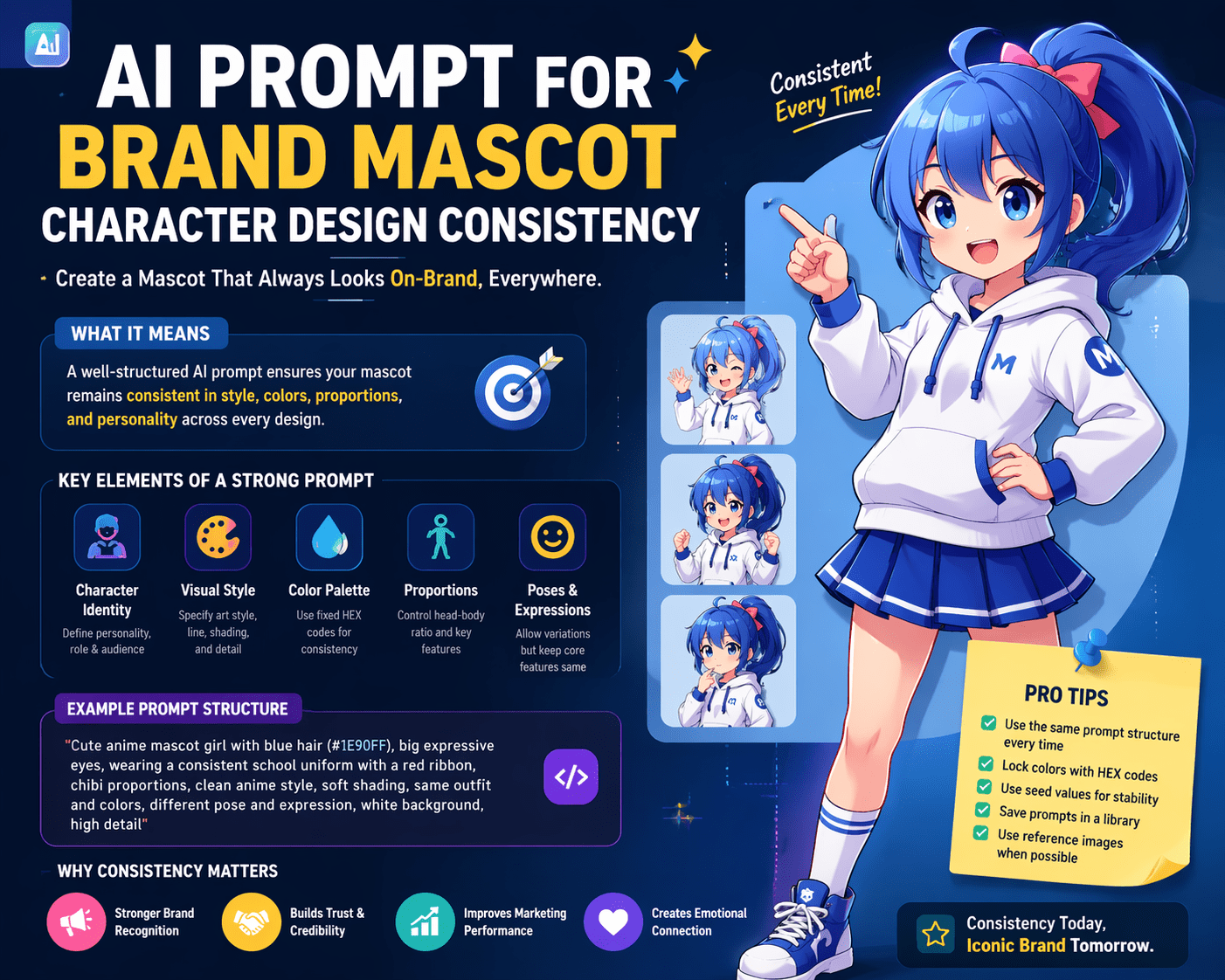
AI Prompt for Brand Mascot Character Design Consistency
AI Prompt for Brand Mascot Character Design Consistency: Build a Mascot That Always Looks “On-Brand”
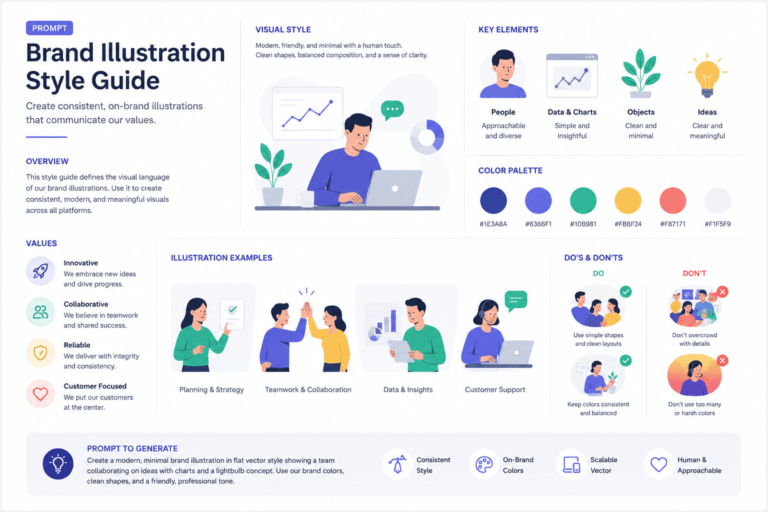
Why consistency is the difference between forgettable and iconic
Think about the last time you recognized a brand instantly—before even reading the name. That moment didn’t happen by accident. It came from visual consistency. If you’re using AI to generate your mascot, you’ve probably noticed something frustrating: one version looks perfect, and the next feels like a completely different character. That inconsistency quietly damages your brand.
The good news is that you can fix this. When you learn how to structure an AI prompt for brand mascot character design consistency, you take control. Instead of random outputs, you get a reliable, recognizable mascot that feels like a real part of your brand.
What “AI prompt consistency” actually means
When you create images with AI, every word you type influences the result. If your prompt changes—even slightly—the output can drift. Consistency means giving the AI clear, repeatable instructions so your mascot stays visually and stylistically stable.
You’re not just describing a character. You’re building a system.
A strong prompt ensures:
- The same facial features appear every time
- Colors remain identical
- Proportions don’t shift
- Personality stays recognizable
Without this structure, your mascot becomes unpredictable.
The core components of a consistent mascot prompt
To get reliable results, your prompt needs to include specific elements every time. Think of these as your “non-negotiables.”
1. Character identity
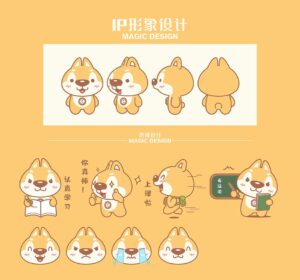
Start by locking in who your mascot is. This isn’t just visual—it’s emotional.
Include:
- Name or role (e.g., friendly assistant, energetic gamer, cute guide)
- Personality traits (playful, calm, confident)
- Target audience alignment
Example:
“a cheerful anime-style mascot designed for a mobile game targeting young girls”
2. Visual style definition
If you don’t define the style, the AI will guess—and that’s where inconsistency starts.
Be precise:
- Anime, cartoon, 3D, flat illustration
- Line thickness and shading
- Level of detail
Example:
“clean anime style, soft shading, smooth line art, vibrant colors”
3. Fixed color palette
Color drift is one of the biggest problems in AI-generated mascots.
You should:
- Specify exact colors
- Use HEX codes when possible
- Mention lighting consistency
Example:
“blue hair (#1E90FF), white and pink outfit, consistent soft lighting”
4. Proportions and structure
Without clear proportions, your mascot’s body can change from image to image.
Define:
- Head-to-body ratio
- Facial proportions
- Signature features
Example:
“large head, small body (chibi style), big expressive eyes”
5. Outfit and accessories
Your mascot’s outfit should never randomly change unless you allow it.
Lock in:
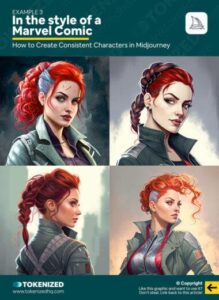
Example:
“wearing a school uniform with a red ribbon, always consistent”
How to write an AI prompt for brand mascot character design consistency
Now let’s turn these elements into a usable structure you can repeat.
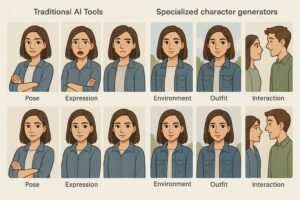
Step-by-step formula you can reuse
- Start with the character identity
- Add visual style instructions
- Define fixed attributes (colors, outfit, features)
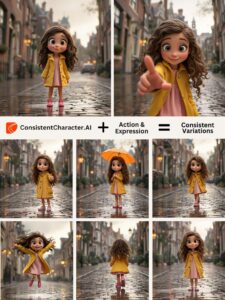
- Control variations (pose, expression only)
- Add technical details (lighting, background, quality)

Example of a strong prompt
“cute anime mascot girl with blue hair (#1E90FF), big expressive eyes, wearing a consistent school uniform with a red ribbon, chibi proportions (large head, small body), clean anime style, soft shading, same outfit and colors, different pose and expression, white background, high detail”
If you reuse this structure, your results will stay stable.
Common mistakes that break mascot consistency
Even small errors can ruin your results. If your mascot keeps changing, one of these is usually the cause.
Changing your wording too often
AI models react to subtle differences. Saying “bright blue hair” in one prompt and “light blue hair” in another can create different outputs.
Forgetting fixed attributes
If you don’t repeat key details (like outfit or color), the AI may replace them.
Overcomplicating your prompt
Too many instructions can confuse the model. Keep it structured and clear.
Ignoring references
If your AI tool allows reference images or seeds, not using them is a missed opportunity for consistency.
Tools that help you maintain consistency
Some platforms make this process easier by giving you more control over outputs.
- MidJourney allows you to reuse prompts and control style with parameters
- DALL·E focuses on clarity and structured descriptions
- Stable Diffusion offers advanced control with seeds and custom training
When choosing a tool, look for:
- Seed control (locks randomness)
- Style references
- Ability to reuse prompts
Building a repeatable workflow for your mascot
Consistency doesn’t come from one good prompt—it comes from a system you follow every time.
Create a prompt library
Save your best-performing prompts so you can reuse them without rewriting.
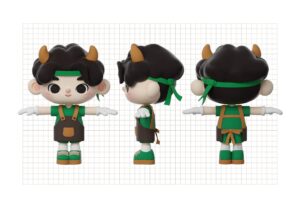
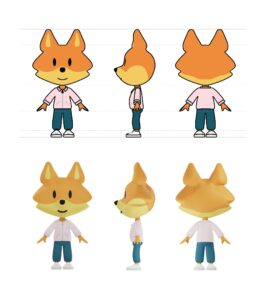
Use a character reference sheet
Keep a visual guide with:
- Front view
- Side view
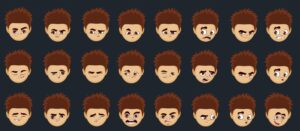
- Expressions
- Color palette
Standardize your outputs
Always use:
- The same background style
- The same resolution
- The same lighting conditions
This ensures your mascot looks consistent across ads, apps, and social media.
Advanced techniques to level up your results
Once you’ve mastered basic prompts, you can go further.
Use seed values
Seeds allow you to reproduce similar images with small variations. This is one of the most powerful tools for consistency.
Train custom styles
With tools like Stable Diffusion, you can train your own model or use LoRA to lock in your mascot’s style.
Iterate using outputs
Take a generated image you like and use it as a reference for future prompts. This keeps everything visually aligned.
Where a consistent mascot gives you an advantage
When your mascot stays consistent, it becomes more than just a design—it becomes a brand asset.
You can use it in:
- Mobile apps (especially onboarding screens and tutorials)
- Social media content
- Advertising campaigns
- Stickers and merchandise
Over time, your audience starts recognizing your mascot instantly. That recognition builds trust, and trust leads to growth.
Final thoughts: Turn your mascot into a brand signature
If your mascot looks different every time, your brand feels unstable. But when you master the AI prompt for brand mascot character design consistency, everything changes. Your visuals become recognizable, your content feels cohesive, and your brand starts to stand out.
You don’t need perfect design skills you need a repeatable system.
Start by building one strong prompt. Test it. Refine it. Save it. Then use it everywhere.
Call to action
Take a few minutes right now and rewrite your current mascot prompt using the structure in this guide. Lock in your character identity, fix your colors, and control your style. Once you do, generate 5 variations and compare them.
You’ll immediately see the difference—and that’s the moment your mascot starts becoming a true brand asset.