
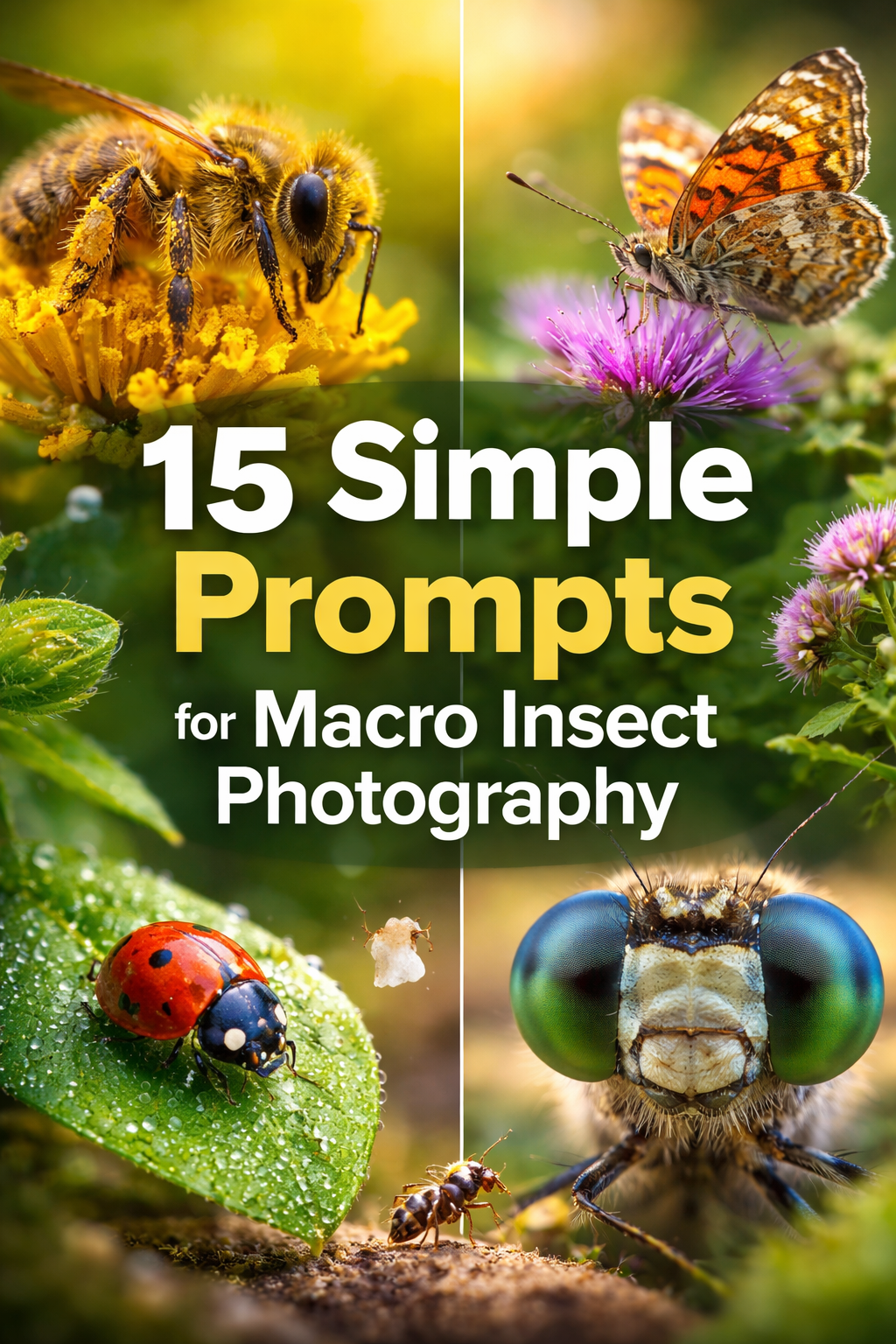
15 Simple Prompts for Macro Insect Photography
15 Simple Prompts for Macro Insect Photography
Macro insect photography is an invitation to slow down. When you crouch near the ground and bring your lens close to a tiny subject, the world changes. Colors deepen, textures emerge, and creatures you once ignored suddenly feel monumental. If you’ve ever felt overwhelmed by technical jargon or unsure what to photograph next, this guide is written for you.
In this article, you’ll discover 15 simple prompts for macro insect photography designed to spark ideas, sharpen your eye, and help you capture compelling close-up images—without overthinking your gear or settings.
 Why Macro Insect Photography Is Worth Your Time
 Why Macro Insect Photography Is Worth Your Time
Macro insect photography is more than a niche genre. It trains you to observe light, movement, and detail with intention. When you photograph insects up close, you begin to understand how patience often matters more than equipment.
Here’s why many photographers fall in love with it:
- You can practice almost anywhere: gardens, parks, balconies
- Insects offer endless variety in shape, color, and texture
- Each shot feels unique because behavior is never identical
Most importantly, macro insect photography teaches you to see, not just shoot.
Essential Basics Before You Start
 Essential Basics Before You Start
You don’t need a studio setup or rare lenses to begin. What you need is awareness.
Simple gear guidelines
- A macro lens, extension tubes, or a clip-on macro for smartphones
- Natural light whenever possible
- A steady hand or small tripod
Mindset matters more than tools
- Move slowly
- Watch insect behavior before shooting
- Accept that missed shots are part of the process
Once you’re prepared, prompts become powerful creative triggers.
15 Simple Prompts for Macro Insect Photography
 15 Simple Prompts for Macro Insect Photography
Use these prompts as starting points, not rules. Each one is designed to push your observation skills and help you tell visual stories.
1. Dew-Covered Wings at Sunrise
Photograph insects early in the morning when dew clings to wings. Cooler temperatures slow movement, making focus easier.
2. Bee Covered in Pollen
Focus on texture. Capture pollen grains on legs, eyes, or thorax to show the insect’s role in nature.
3. Butterfly with Closed Wings
Side profiles reveal intricate patterns often missed when wings are open.
4. Dragonfly Eyes in Sharp Focus
Challenge yourself to focus on the compound eyes. This prompt trains precision.
5. Ladybug on a Leaf Edge
Use negative space. Let the background fall into a smooth blur.
6. Ant Carrying Something Larger Than Itself
This prompt tells a story of scale, effort, and movement.
7. Insect Silhouette Against Light
Position the insect between your lens and the sun for dramatic contrast.
8. Camouflaged Insect Blending In
Look for insects that almost disappear into bark, leaves, or soil.
9. Spider Legs and Fine Details
Focus on texture and form rather than the entire body.
10. Insect Reflected in a Water Droplet
This advanced-looking shot is achievable with patience and angle control.
11. Caterpillar in Motion
Capture mid-movement to add life and direction to your image.
12. Insect on Flower Stamens
Use shallow depth of field to isolate details while keeping context.
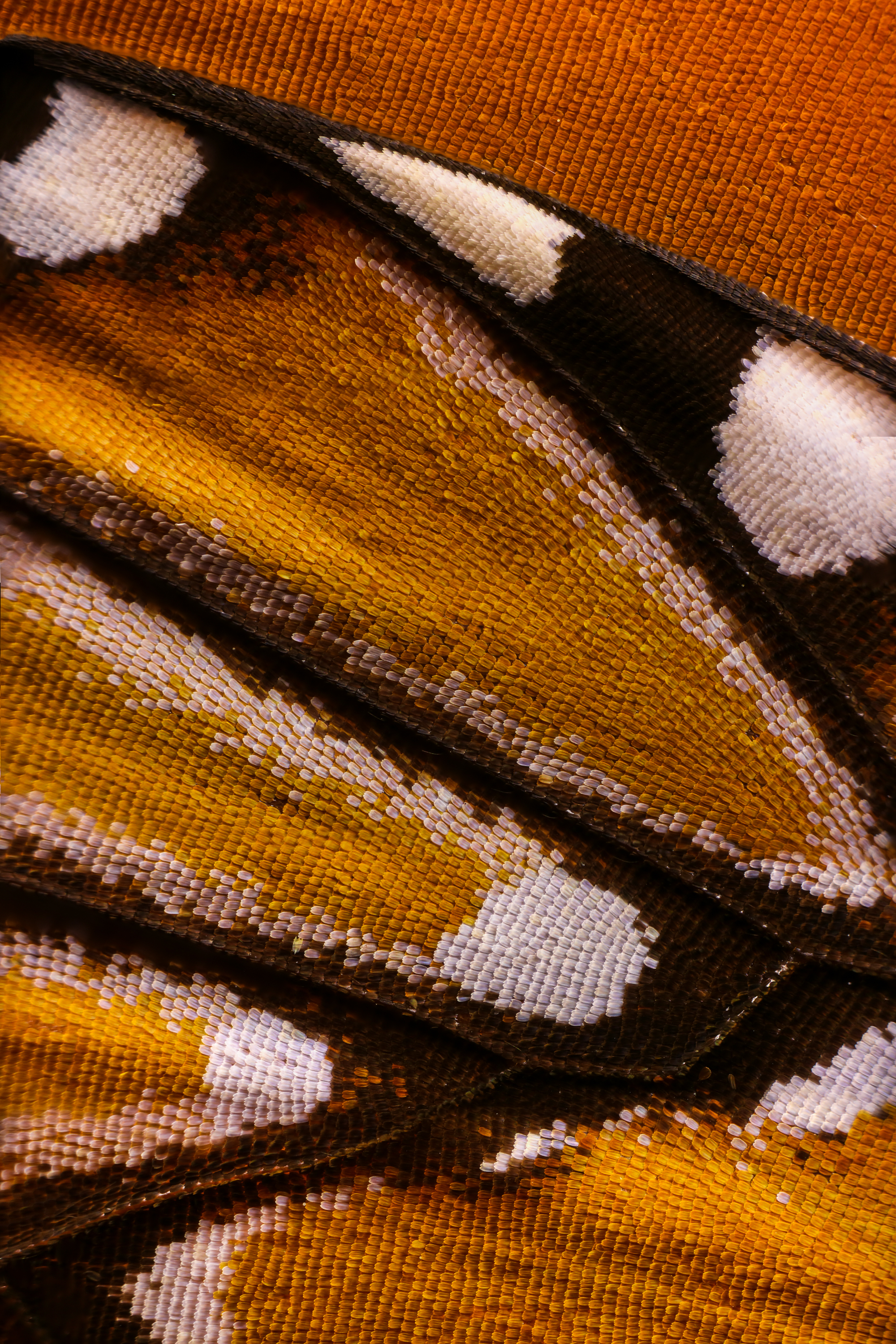
13. Extreme Close-Up of Texture
Zoom in on eyes, wings, or antennae—abstract beauty often lives here.
14. Two Insects Interacting
Look for moments of connection, conflict, or cooperation.
15. Insect Framed by Natural Elements
Use petals, leaves, or stems as natural frames.
These 15 simple prompts for macro insect photography help you avoid creative blocks and keep shooting with purpose.
Best Camera Settings for Macro Insect Photography
 Best Camera Settings for Macro Insect Photography
While every situation differs, these settings provide a reliable starting point.
Recommended starting settings
- Aperture: f/8 – f/16 for depth
- Shutter speed: 1/200 or faster
- ISO: Keep as low as possible
Focusing tips
- Manual focus offers more control
- Move your body slightly instead of refocusing constantly
- Focus on the eyes whenever possible

Lighting Tips That Make a Big Difference
Light defines macro photography. Harsh light exaggerates flaws, while soft light reveals beauty.
Natural light works best when:
- Shooting early morning or late afternoon
- Clouds diffuse direct sunlight
If you use artificial light:
- Always diffuse flash
- Avoid pointing light directly at reflective surfaces
Soft light helps textures appear natural rather than harsh.
Composition Techniques That Elevate Your Shots
Great macro insect photography isn’t just about sharpness.
Try these composition ideas:
- Shoot at eye level with the insect
- Simplify the background
- Use diagonal lines created by stems or wings
- Leave breathing room around your subject
Composition turns documentation into art.
Common Mistakes You Should Avoid
Many photographers struggle not because of skill, but because of habits.
Frequent issues:
- Rushing the shot
- Ignoring background clutter
- Over-editing details
Simple solutions:
- Slow down
- Change your angle
- Edit lightly to preserve realism
Mistakes are teachers—pay attention to them.
Editing Macro Insect Photography Without Overdoing It
Editing should enhance, not dominate.
Focus on:
- Gentle sharpening
- Natural color balance
- Subtle contrast
Avoid extreme saturation or artificial textures. Macro images are powerful when they feel honest.
Frequently Asked Questions About Macro Insect Photography
Can you do macro insect photography without a macro lens?
Yes. Extension tubes, close-up filters, and smartphone macro attachments work well.
What is the best time of day for macro insect photography?
Early morning is ideal due to soft light and slower insect movement.
Are these 15 simple prompts for macro insect photography good for beginners?
Absolutely. They’re designed to guide your eye, not overwhelm you.
How close should you get to insects?
Close enough to capture detail, but far enough to avoid disturbing them.
Conclusion: Turn Small Moments Into Powerful Images
Macro insect photography teaches you patience, observation, and respect for small life forms. These 15 simple prompts for macro insect photography are not rules—they’re invitations. Each one encourages you to look closer, wait longer, and create images that feel alive.
If you want to improve your photography, don’t chase complexity. Pick one prompt, head outside, and give yourself time.
👉 Your next step
Choose one prompt today, grab your camera, and shoot with intention.
Share your results, revisit this guide, and let curiosity lead the way.