
40 AI Prompts for Sales Copy That Converts
40 AI Prompts for Sales Copy That Converts help you write persuasive, high-converting sales copy, overcome objections, and increase conversions using proven AI techniques.
The good news? You no longer have to start from a blank page or guess what words will persuade your audience. With the right AI prompts, you can guide artificial intelligence to produce sales copy that speaks directly to human emotions, objections, and desires. This guide breaks down 40 AI prompts for sales copy that converts, showing you how to use them strategically to increase clicks, trust, and sales.
Why Sales Copy Is the Real Conversion Lever
No matter how good your product is, people don’t buy logic alone. They buy clarity, confidence, and outcomes. Sales copy acts as the bridge between interest and action. When it fails, visitors hesitate. When it works, they move forward without friction.
AI doesn’t magically create high-converting copy on its own. What does work is giving it precise, psychologically aligned prompts. That’s where these 40 AI prompts for sales copy that converts come in—they help you control the output instead of reacting to it.
How to Use AI Prompts for Sales Copy the Right Way
Before jumping into the prompts, you need a simple mindset shift. AI is not your copywriter. It’s your accelerator.
To get better results, always:
- Define your audience clearly
- Focus on one core pain point per prompt
- Tell the AI what outcome you want, not just what to write
When you do this, the copy sounds human, targeted, and persuasive.
40 AI Prompts for Sales Copy That Converts (Organized by Funnel Stage)
Below, you’ll find the prompts grouped by purpose. You can use them for landing pages, ads, emails, product descriptions, or sales pages.
Awareness-Stage AI Prompts (Grab Attention)
These prompts help you stop the scroll and make people feel understood.
- “Write a headline that calls out [specific pain point] in a way that feels personal and urgent.”
- “Create an opening paragraph that makes the reader feel ‘this was written for me.’”
- “Explain a common frustration my audience faces, without mentioning the product yet.”
- “Write a bold statement that challenges how people currently solve this problem.”
- “Describe the cost of doing nothing about [problem] in emotional terms.”
- “Create a curiosity-driven hook that makes the reader want the solution.”
- “Write an intro that feels like a conversation, not a sales pitch.”
- “Highlight a hidden mistake people make when trying to solve this issue.”
Engagement & Interest AI Prompts (Build Connection)
These prompts keep readers engaged and guide them deeper into your message.



- “Explain the problem using a short relatable story.”
- “Reframe the problem so it feels solvable, not overwhelming.”
- “Describe the ideal outcome the reader wants in vivid detail.”
- “Compare the old way vs the new way of solving this problem.”
- “Write copy that acknowledges skepticism without being defensive.”
- “Turn a technical benefit into a simple, everyday example.”
- “Explain why most solutions fail and what’s missing.”
- “Create a smooth transition from problem awareness to solution discovery.”
Desire-Focused AI Prompts (Make Them Want It)
This is where conversion momentum builds. These prompts tap into emotion and transformation.

- “Describe how the reader’s life improves after using this solution.”
- “Turn product features into emotional benefits.”

- “Write copy that focuses on results, not process.”
- “Paint a before-and-after scenario the reader can visualize.”
- “Explain how this solution saves time, money, or stress.”
- “Highlight what makes this offer different from competitors.”
- “Position the product as a shortcut to the desired outcome.”
- “Write a section that answers ‘Why now?’ convincingly.”
- “Create desire without hype or exaggerated promises.”
- “Describe the transformation using simple, concrete language.”
Action & CTA AI Prompts (Drive Conversions)
These prompts push the reader from interest to action.


- “Write a call-to-action that feels helpful, not pushy.”
- “Create urgency without using fake scarcity.”
- “Explain what happens immediately after clicking the button.”
- “Reduce friction by clarifying the next step.”
- “Write a CTA focused on the benefit, not the action.”
- “Encourage action using confidence and reassurance.”
- “Create a CTA for readers who are almost convinced.”
- “Write a short reminder of what they gain by acting now.”
Trust & Objection-Handling AI Prompts
These prompts remove resistance and build confidence.
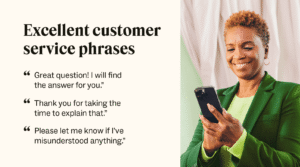
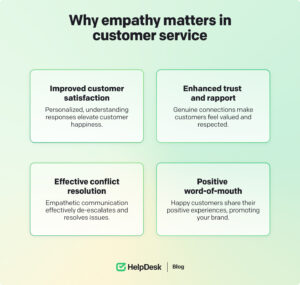
 “Address the most common objection honestly and clearly.”
- “Write reassurance for readers worried about risk.”
- “Explain who this product is and is not for.”
- “Highlight credibility without sounding boastful.”
- “Create copy that reduces fear of making the wrong choice.”
- “Write a closing section that reinforces trust and clarity.”
Key Elements That Make Sales Copy Convert
To make the most of these 40 AI prompts for sales copy that converts, your copy should always include the right ingredients.
| Element | Why It Matters |
|---|---|
| Clear Pain Point | Shows immediate relevance |
| Desired Outcome | Gives readers something to move toward |
| Proof or Logic | Builds trust and credibility |
| Simplicity | Reduces mental friction |
| Strong CTA | Turns interest into action |
Common Mistakes to Avoid When Using AI for Sales Copy
Even with strong prompts, mistakes can lower conversions.
- Using generic prompts with no context
- Letting AI write without editing
- Focusing on features instead of outcomes
- Writing for everyone instead of one audience
- Overloading copy with buzzwords
AI works best when you guide it with intention and refine the output with human judgment.
Frequently Asked Questions
What are 40 AI Prompts for Sales Copy That Converts?
They are structured instructions that guide AI to generate persuasive, conversion-focused sales copy instead of generic text.
Can beginners use these AI sales copy prompts?
Yes. These prompts are designed to work even if you have no copywriting background.
Do these prompts work for any niche?
They work across e-commerce, SaaS, coaching, digital products, and service-based businesses.
How do you customize AI prompts for higher conversions?
You replace generic placeholders with your audience’s real pain points, goals, and objections.
Final Thoughts: Turn AI Into a Sales Asset
Sales copy doesn’t have to feel hard, confusing, or random. When you use 40 AI prompts for sales copy that converts, you give yourself structure, clarity, and speed—without sacrificing authenticity.
Start small. Test a few prompts. Refine the output. Measure results.
The more intentional your prompts, the more powerful your copy becomes.
👉 Your next step: Pick three prompts from this list and apply them to your landing page or ad today. Conversion improvements often start with better words, not bigger budgets.
❓ FAQ – Trust & Objection-Handling AI Prompts
1. What are Trust & Objection-Handling AI prompts?
Trust & Objection-Handling AI prompts are carefully written instructions that guide AI to respond in a way that builds confidence, reduces doubt, and addresses user concerns honestly instead of pushing aggressive persuasion.
2. Why is trust important when using AI prompts?
Without trust, users hesitate to act, buy, or rely on AI outputs. Trust-focused prompts help AI sound transparent, human, and reliable—making users more comfortable with decisions.
3. What types of objections can AI prompts handle?
AI prompts can address objections such as:
“Is this safe?”
“Does this really work?”
“Can I trust this AI?”
“Is my data protected?”
“Is this worth the cost?”
4. How do objection-handling prompts improve conversions?
They reduce uncertainty by explaining benefits clearly, acknowledging concerns, and offering reassurance—leading to higher engagement, sign-ups, and sales.
5. Are these prompts useful only for marketing?
No. They are also effective for:
Customer support
AI chatbots
SaaS onboarding
Product explanations
Ethical AI communication
6. What tone works best for trust-based AI prompts?
A calm, neutral, and honest tone works best. Avoid hype, exaggerated claims, or pressure language. Clear explanations always outperform emotional manipulation.
7. Can trust-focused AI prompts help new websites?
Yes. For new or low-authority websites, trust-building prompts help compensate for the lack of brand recognition by making communication feel credible and human.
8. How do visuals support trust-based AI prompts?
Images showing real people, calm interactions, transparency, and security reinforce the message emotionally and make AI outputs feel more reliable.
9. Are trust & objection-handling prompts aligned with Google guidelines?
Yes. They support Google Helpful Content and E-E-A-T principles by prioritizing clarity, honesty, and user benefit over manipulation.