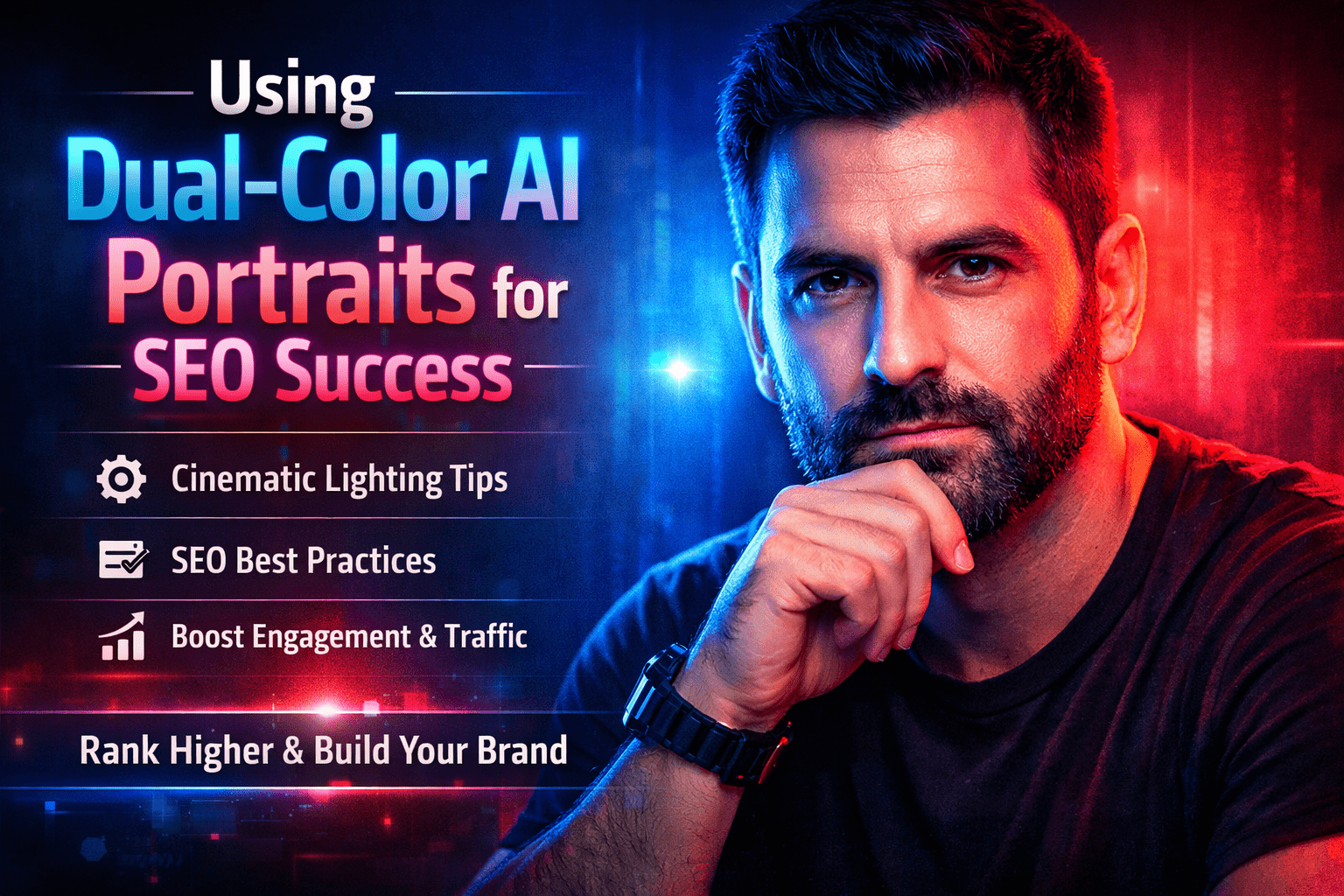
Learn how to use a dual-color portrait prompt to create
Learn how to use a dual-color portrait prompt to create a striking AI portrait is no longer just about aesthetics. When done right, it becomes a powerful content asset that boosts engagement, strengthens brand identity, and supports SEO goals. In this guide, you’ll learn how to use the provided dual-color portrait prompt effectively, how to integrate it into high-value content, and how to turn a single image concept into a traffic-driving strategy — without changing the face.
Why This Prompt Works So Well for Visual Content
The prompt you’re using is strong because it combines cinematic lighting, emotional expression, and visual contrast. These three elements are proven to increase attention span and scroll-stopping behavior.
Here’s what makes it effective:
- Dual-color lighting (blue + pink/red) creates emotional tension and visual depth
- Direct eye contact builds connection and trust with the viewer
- Minimal background keeps focus on the subject
- Pensive pose (hand on chin) suggests intelligence, creativity, and introspection

From a content perspective, this type of image performs exceptionally well in:
- Blog hero sections
- Personal brand pages
- AI-focused tutorials
- Creative or tech-driven articles
Understanding the “DO NOT CHANGE THE FACE” Rule
One of the most important instructions in your prompt is DO NOT CHANGE THE FACE. This is crucial when:
- You’re building a personal brand
- You want consistency across multiple images
- You’re using the portrait as a recurring visual identity

To respect this rule while still generating variations, you should:
- Change lighting intensity, not structure
- Adjust background mood, not facial features
- Modify color balance, not expression
This ensures your visual identity stays recognizable while still feeling fresh.
How to Turn This Prompt Into SEO-Friendly Content
Search engines don’t “see” images the way humans do — they rely on context, structure, and supporting text. That’s where your article comes in.
When you write content around this prompt, your goal is to:
- Explain what the image represents
- Describe why the visual works
- Show how readers can apply it
This creates semantic relevance and improves your chances of ranking.
Suggested Keyword Themes (Use Naturally)
To maximize SEO impact, weave these ideas into your article naturally:
- AI portrait prompt
- cinematic lighting portrait
- dual-color lighting photography
- neon portrait effect
- creative AI image generation
- professional AI portrait
Avoid keyword stuffing. Instead, let the terms appear where they make sense in context.

Breaking Down the Prompt for Better Results
Let’s look at how each part of the prompt contributes to the final outcome — and how you can explain it clearly to your audience.
1. Lighting Direction and Color Psychology
Blue lighting often communicates calm, logic, and technology. Pink or red tones suggest emotion, passion, and energy. When combined, they create contrast that feels modern and cinematic.
This is why dual-tone lighting works so well for:
- Tech creators
- Designers
- AI educators
- Personal brands in digital spaces
2. Expression and Pose
A thoughtful expression paired with a hand-on-chin pose subtly communicates:
- Expertise
- Curiosity
- Problem-solving
These are traits your readers subconsciously associate with credibility.
3. Wardrobe and Accessories
A dark t-shirt and watch keep the look neutral and professional. There’s no distraction, which makes the portrait adaptable across different types of content.
Where This Type of Image Performs Best
You can get more value from this prompt by using it strategically across platforms.
High-impact use cases include:
- Blog featured images
- About pages
- AI tutorial thumbnails
- Landing pages
- Social media banners
When paired with strong copy, this portrait style reinforces authority and boosts dwell time.
Writing Around the Image: Best Practices
To truly benefit from this visual, your article should:
- Start with a strong introduction that frames the image’s purpose
- Use clear headings that guide the reader
- Include short paragraphs for readability
- Explain concepts in a way that feels human, not robotic
Remember, you’re writing to the reader, not to an algorithm.
Common Mistakes to Avoid
Even a great prompt can underperform if paired with weak content. Avoid these pitfalls:
- Overusing technical jargon
- Repeating the same sentence structures
- Ignoring image descriptions (alt text matters)
- Writing generically without adding insight
Your goal is clarity, originality, and usefulness.
How This Prompt Helps Build Authority
When you consistently use a recognizable portrait style:
- Readers remember you
- Your brand feels cohesive
- Your content looks intentional
Over time, this visual consistency builds trust — and trust improves conversions.
Final Thoughts: Turn One Prompt Into Long-Term Value
This dual-color portrait prompt is more than an image instruction. It’s a branding tool, a content anchor, and an SEO asset when used correctly.
If you combine:
- A strong, consistent visual
- Well-structured, second-person writing
- Clear explanations and real value
You create content that doesn’t just rank — it resonates.
Call to Action 🚀
Now it’s your turn. Use this prompt as the foundation for your next article, landing page, or brand update. Write with intention, keep the face consistent, and focus on helping your reader understand why the visual works — not just how it looks.
If you want, I can next:
- Optimize this article for a specific focus keyword
- Write meta descriptions, titles, and alt text
- Turn this into a pillar content strategy
Just tell me 🔥