
AI prompts to get more accurate answers
Have you ever felt disappointed after asking an AI a question and receiving an answer that was vague, generic, or slightly off the mark? You’re not doing anything wrong—but you might be asking the wrong way. The truth is simple: AI prompts to get more accurate answers are the real secret behind high-quality AI results.
AI tools don’t automatically understand what you want. They respond based on patterns, context, and clarity. When your prompt lacks direction, the output reflects that. When your prompt is precise, structured, and intentional, the answers become sharper, deeper, and far more useful.
This guide shows you exactly how to do that.
 Why AI Prompts Matter More Than the AI Itself
 Why AI Prompts Matter More Than the AI Itself
You might assume that smarter AI models always produce better answers. In reality, prompt quality has a greater impact than the model you’re using.
AI does not think or reason the way humans do. It predicts responses based on the information you provide. If your prompt is unclear, the AI fills in the gaps by guessing—and that’s where inaccuracies come from.
Well-written AI prompts to get more accurate answers help you:
- Reduce vague or repetitive responses
- Avoid incorrect assumptions
- Get results tailored to your real goal
- Save time by avoiding multiple retries
In short, better prompts mean better outcomes.

What Are AI Prompts to Get More Accurate Answers?
An AI prompt is more than a question. It’s an instruction set.
When your prompt clearly defines what you want, how you want it, and under which conditions, the AI can respond with precision instead of approximation.
Effective prompts usually include:
- Context (background information)
- A clear task or objective
- Constraints or rules
- A defined output format
When these elements work together, accuracy improves dramatically.

Common Prompting Mistakes That Reduce Accuracy
Before improving your prompts, it helps to know what usually goes wrong.
1. Being Too Vague
Short prompts like “Explain SEO” or “Write about AI” leave too much room for interpretation. The AI doesn’t know your experience level, purpose, or desired depth.
2. Asking Multiple Things at Once
Combining several unrelated questions in one prompt often leads to shallow or incomplete answers.
3. Skipping Context
Without context, AI defaults to general knowledge. That’s rarely what you want if accuracy matters.
4. Ignoring Output Structure
If you don’t specify format, the AI decides for you—which may not suit your needs.

The Core Structure of AI Prompts to Get More Accurate Answers
To consistently improve results, think of prompts as having four building blocks.
1. Assign a Role
Tell the AI who it should act as.
Examples:
- “Act as an SEO expert”
- “Act as a professional copywriter”
- “Act as a beginner-friendly tutor”
This sets expectations and narrows the response style.
2. Define the Task Clearly
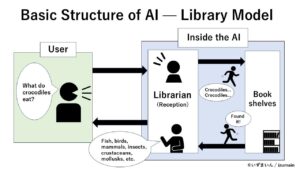
Be specific about what you want done.
Instead of:
“Write about prompts”
Use:
“Explain how AI prompts improve answer accuracy, with practical examples for beginners.”
3. Add Constraints
Constraints reduce uncertainty.
You can define:
- Word count
- Tone (informative, conversational, technical)
- Language level
- Target audience
4. Control the Output Format
Request structure explicitly:
- Headings and subheadings
- Bullet points
- Tables
- Step-by-step instructions
Proven Prompt Frameworks You Can Reuse
Using a framework makes your prompts repeatable and reliable.
The RTF Framework (Role – Task – Format)
Example:
“Act as an AI specialist. Explain how to write AI prompts to get more accurate answers. Use bullet points and short paragraphs.”
The CORE Method
- Context: background details
- Objective: what you want to achieve
- Rules: constraints and limits
- Expected Output: format and style
This approach dramatically reduces guesswork.

Practical Examples of AI Prompts to Get More Accurate Answers
For Research Tasks
“Act as a market researcher. Analyze current trends in AI prompt engineering for beginners. Focus on accuracy and practical use cases. Present the findings in bullet points.”
For Writing Tasks
“Act as an SEO copywriter. Write a 1,000-word article explaining AI prompts to get more accurate answers, using second-person POV and an informative tone.”
For Problem Solving
“Act as a programming tutor. Explain why this error occurs and provide a step-by-step solution in simple terms.”
Why Tables Improve Accuracy (Especially for Structured Content)
Tables force clarity. They limit interpretation and help the AI organize information logically.
You can request tables for:
- Comparisons
- Checklists
- Recipes
- Data summaries
Example request:
“Present the information in a table with columns for concept, purpose, and example.”
When structure is clear, accuracy improves.
Advanced Techniques to Improve AI Accuracy Even More
Use Iterative Prompting
Don’t expect perfection on the first try. Refine based on the output.
Example:
- First prompt: general explanation
- Second prompt: “Go deeper into step 2”
- Third prompt: “Simplify for beginners”
Ask for Reasoning
Prompts like:
- “Explain your reasoning step by step”
- “List assumptions before answering”
These reduce hallucinated responses.
Provide Examples
Showing the AI what you want often works better than explaining it.
How to Test and Improve Your Prompts Over Time
Treat prompts as assets, not one-off questions.
- Save high-performing prompts
- Compare outputs from small changes
- Track which structures produce the most accurate answers
- Build your own prompt library
Over time, you’ll notice consistent improvement.
Frequently Asked Questions About AI Prompts to Get More Accurate Answers
What makes AI prompts more accurate?
Clear context, defined roles, constraints, and structured output.
Do longer prompts always work better?
No. Clarity matters more than length.
Can beginners use advanced prompting techniques?
Yes. Frameworks simplify the process.
Why does AI sometimes sound confident but wrong?
Because vague prompts force the AI to guess.
How often should you refine prompts?
Any time the output feels incomplete or unclear.
Conclusion: Accuracy Starts With How You Ask
AI is not unreliable—you just need to guide it properly. Once you understand how AI prompts to get more accurate answers work, you stop relying on trial and error and start getting results you can trust.
The better your prompts, the better your outcomes.
And now, you have everything you need to start asking smarter questions.