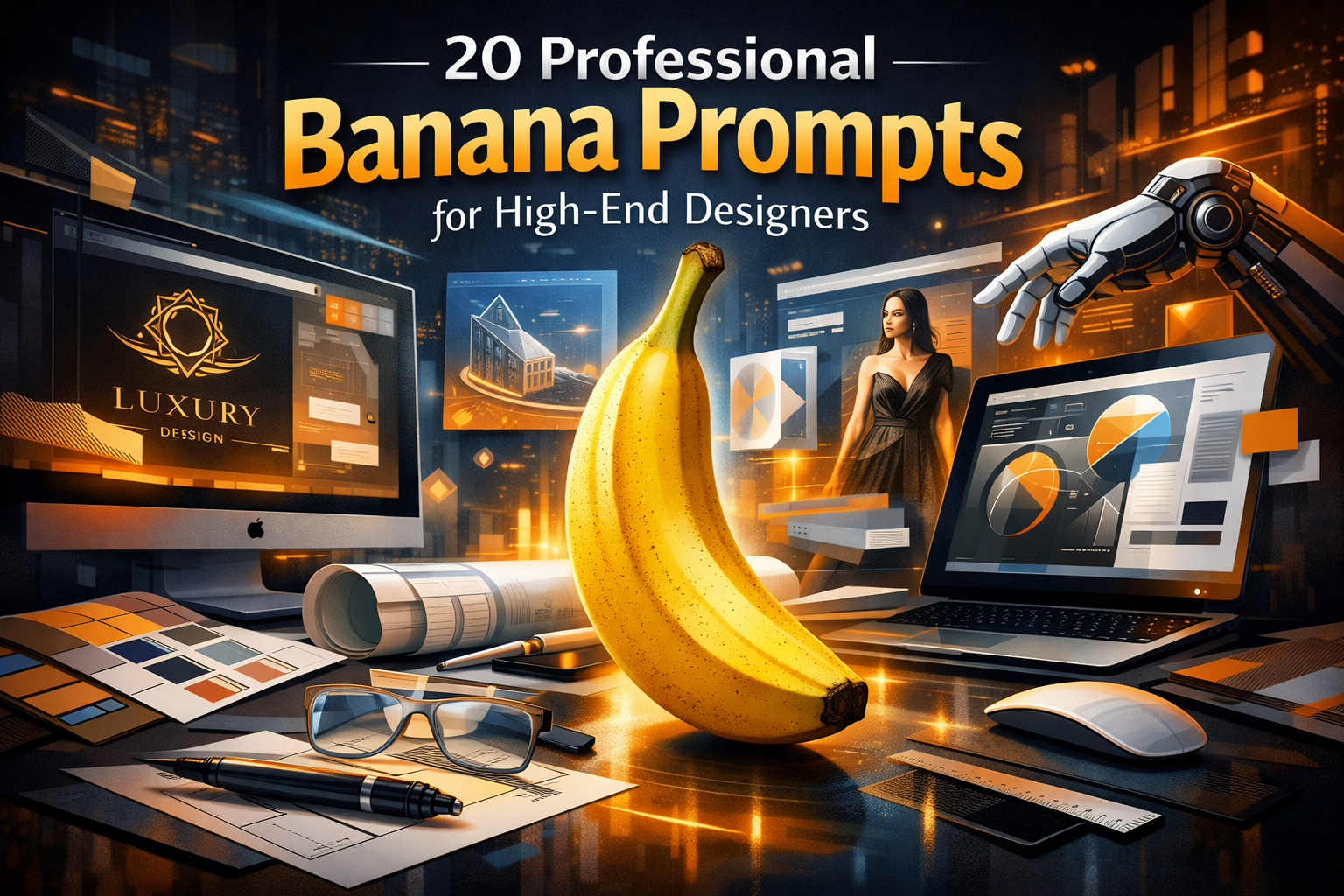
20 Professional Banana Prompts for High-End Designers
20 Professional Banana Prompts for High-End Designers
Introduction: When Skill Alone Isn’t Enough
You’ve reached a level where raw talent is no longer the problem. You understand typography, spacing, hierarchy, and brand systems. Yet there are moments when even experienced designers feel stuck—briefs feel repetitive, concepts blur together, and inspiration doesn’t land with the same sharpness it once did. This is where professional-grade prompts step in.
20 Professional Banana Prompts for High-End Designers are not playful ideas or surface-level inspiration. They are structured creative triggers designed to help you think with clarity, direction, and intention. When used correctly, these prompts help you move faster without sacrificing quality, and they elevate your work rather than dilute it.
This guide is written for you—the designer working with demanding clients, premium brands, or personal projects that must meet a high standard.
What Are Professional Banana Prompts?
At their core, banana prompts are strategic creative instructions. Unlike generic prompts, they are designed to:
- Define a clear creative outcome
- Introduce constraints that sharpen ideas
- Align visuals with business or brand goals
For high-end designers, prompts must do more than spark ideas. They must guide decision-making, reduce creative friction, and protect consistency across projects.
Why High-End Designers Need Specialized Prompts
When you work at a professional level, vague inspiration becomes risky. Generic prompts often lead to:
- Inconsistent visual direction
- Designs that look trendy but lack depth
- Outputs that don’t scale across platforms
Professional banana prompts solve this by anchoring creativity to purpose, audience, and tone—elements that matter when your work is visible, valuable, and judged.
How You Should Use Banana Prompts in Professional Workflows
When to Apply These Prompts
You’ll get the most value from banana prompts when you use them intentionally:
- During early concept exploration
- While preparing client pitches
- When facing creative fatigue
- When working with AI design tools
Instead of waiting for inspiration, you use prompts to create momentum.
How to Adapt Prompts to Client Needs
You should never use a prompt “as-is.” High-end results come from customization. Adjust prompts based on:
- Brand tone (luxury, minimal, bold, editorial)
- Target audience expectations
- Platform requirements (print, web, mobile, AI)
Think of prompts as frameworks, not shortcuts.
20 Professional Banana Prompts for High-End Designers

Brand Identity & Visual Systems (Prompts 1–5)
- Design a luxury brand identity using only two colors and one typeface, focusing on hierarchy rather than decoration.
- Create a logo system that works equally well in print, digital, and monochrome environments.
- Develop a visual identity inspired by architectural balance and negative space.
- Design a brand system where typography carries more weight than imagery.
- Build a premium brand style guide that prioritizes restraint over expression.
These prompts help you think in systems, not isolated visuals.
UI/UX & Digital Product Design (Prompts 6–10)
- Design a SaaS dashboard where clarity matters more than feature density.
- Create a mobile app interface that feels premium without relying on animation.
- Redesign a landing page using only spacing and typography to guide attention.
- Develop a UI system that scales across five different screen sizes seamlessly.
- Design a product interface that communicates trust within the first three seconds.
These prompts sharpen your understanding of usability, hierarchy, and conversion.
Editorial, Fashion & Conceptual Design (Prompts 11–15)
- Design a magazine cover that tells a story without using photography.
- Create a fashion campaign layout that communicates mood before product.
- Develop an editorial spread using asymmetry as a storytelling tool.
- Design a visual narrative based on contrast between silence and impact.
- Build a conceptual design piece inspired by restraint rather than excess.
These prompts push your storytelling skills and emotional awareness.
Experimental & AI-Driven Concepts (Prompts 16–20)
- Generate an AI-assisted visual concept using a strict color limitation.
- Create an experimental design where imperfections are intentional.
- Design a future-facing concept that avoids common “futuristic” clichés.
- Use AI prompts to explore texture and depth instead of subject matter.
- Build a portfolio concept that values thought process more than visuals.
These are ideal for exploration, portfolios, and creative research.
Banana Prompt “Recipe” for High-End Designers
Below is a professional structure you can reuse to craft your own prompts:
| Ingredient | Description | Professional Tip |
|---|---|---|
| Concept Goal | What the design must achieve | Tie it to business outcomes |
| Visual Style | Minimal, luxury, editorial | Limit styles to maintain focus |
| Audience | Who the design speaks to | Define expectations clearly |
| Platform | Print, web, mobile, AI | Optimize for final output |
| Emotional Tone | Calm, bold, exclusive | Match brand voice |
Treat each prompt like a recipe—balanced, intentional, and repeatable.Common Mistakes You Should Avoid
Overloading Prompts
More instructions don’t mean better results. Too many constraints kill flexibility. Keep prompts focused.
Ignoring Brand Context
A prompt without brand awareness produces generic output. Always anchor prompts to identity.
Treating Prompts as Final Decisions
Prompts guide creativity; they don’t replace your judgment. You remain the decision-maker.
How Professional Banana Prompts Improve Your Design Quality
When used consistently, these prompts help you:
- Reduce time spent on ideation
- Maintain consistency across projects
- Communicate ideas clearly to clients
- Make design decisions with confidence
Instead of guessing, you design with intention.
Frequently Asked Questions
What makes these 20 Professional Banana Prompts for High-End Designers different?

Can you use these banana prompts with AI design tools?
Yes. These prompts work exceptionally well with AI when you want controlled, premium output.
Are these prompts suitable for agencies and studios?
Absolutely. They scale well across teams and improve creative alignment.
How often should you update your banana prompts?
Review and refine them quarterly based on trends, feedback, and project outcomes.
Conclusion: High-Level Design Starts with Better Thinking
At the professional level, creativity isn’t about more ideas—it’s about better direction. The difference between average output and exceptional work often lies in how you frame the problem before you design anything.
By applying these 20 Professional Banana Prompts for High-End Designers, you give yourself a repeatable advantage: clarity, focus, and creative control.
Your Next Step
Choose three prompts from this list and apply them to your next project—client work or personal exploration. Save this guide, adapt the prompts, and refine them over time. The more intentional your prompts become, the stronger your design voice will be.
High-end results don’t happen by accident. You design them—on purpose.