20 Easy Prompts for Learning New Programming Languages
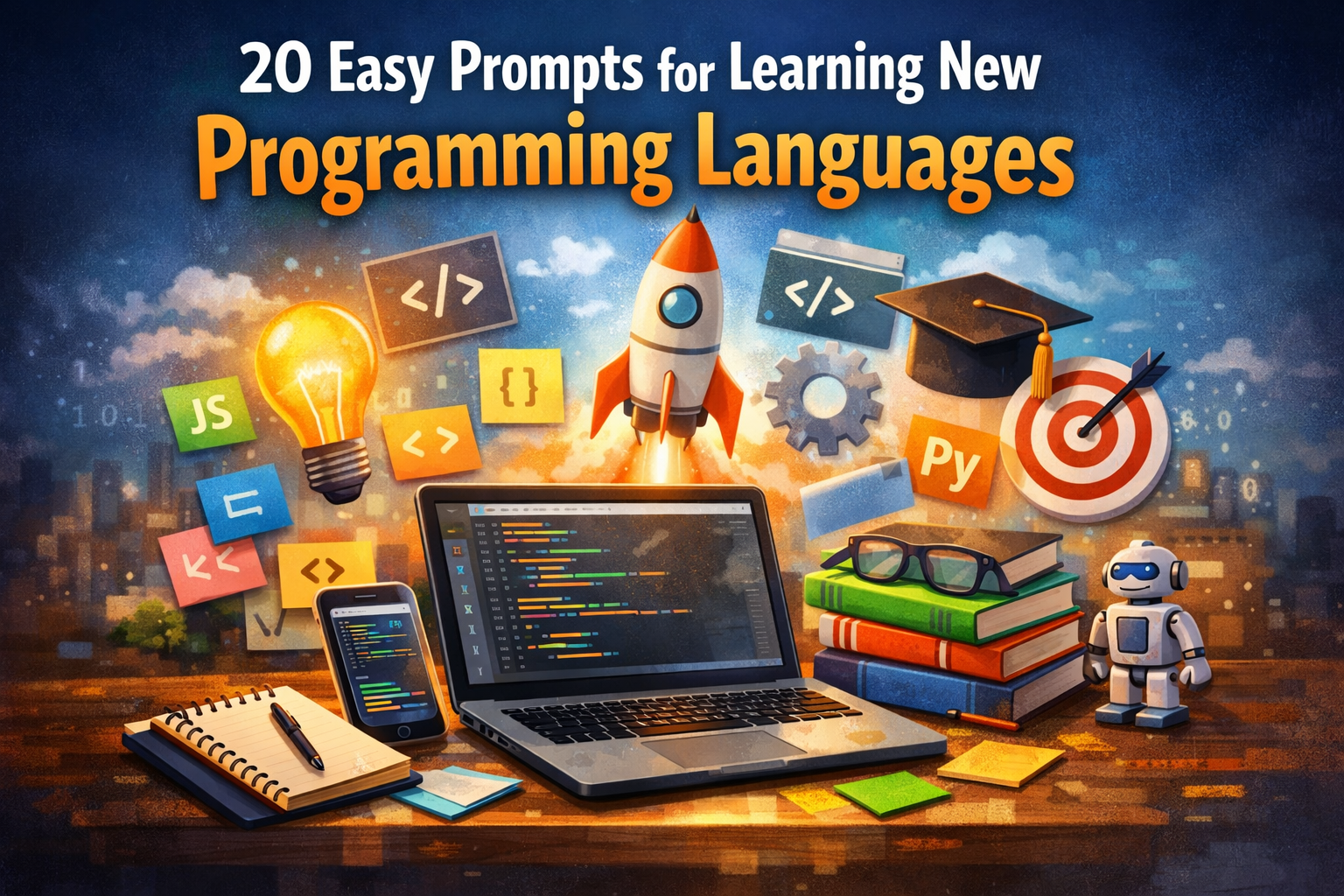
20 Easy Prompts for Learning New Programming Languages
Learning a new programming language can feel like standing at the base of a mountain. You’re motivated at first, but after a few lessons, the excitement fades into confusion. Syntax feels unfamiliar, examples feel disconnected, and progress seems slow. If that sounds familiar, the problem isn’t your ability—it’s the approach you’re using.
That’s why 20 Easy Prompts for Learning New Programming Languages can make such a difference. Instead of drowning in theory, you work through simple, guided challenges that teach you how to think, not just what to type. These prompts help you move from hesitation to confidence, one small step at a time.
Why Learning New Programming Languages Is Harder Than It Should Be
Most beginners struggle for the same reasons:
- Tutorials move too fast
- Concepts are explained without context
- Practice comes too late
- Mistakes feel discouraging
When you try to learn everything at once, your brain pushes back. Programming is a skill, not information to memorize. You don’t learn it by watching—you learn it by doing.
This is where easy prompts change the game.
 How Prompts Help You Learn Faster and Retain More
 How Prompts Help You Learn Faster and Retain More
Prompts give your learning structure without pressure. Instead of telling you exactly what to write, they ask you to solve a small problem. That mental effort is where real learning happens.
Using easy prompts for learning new programming languages helps you:
- Focus on one concept at a time
- Build problem-solving habits
- Learn through experimentation
- Understand errors instead of fearing them
Each prompt is a low-risk challenge. You try, you fail, you fix, and suddenly the language starts making sense.
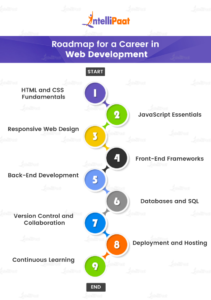
How to Use These 20 Easy Prompts Effectively
Before diving in, set realistic expectations. You don’t need hours a day or advanced tools.
Simple Rules for Better Results
- Pick one language and stick with it
- Practice consistently, even if it’s short
- Write the code yourself—don’t copy blindly
- Reflect on what worked and what didn’t
A Practical Learning Workflow
- Read the prompt carefully
- Plan your solution in plain language
- Write the code
- Run it and observe the output
- Improve or expand it
This process trains your brain to think like a programmer.
20 Easy Prompts for Learning New Programming Languages
Below are prompts divided by difficulty to guide your progress naturally.

Beginner Prompts (1–7)
These prompts help you understand basic syntax and structure.
- Write a program that displays a message on the screen
- Create a variable and print its value
- Ask the user for their name and respond with a greeting
- Perform basic arithmetic operations
- Convert user input into a number
- Write a simple if-else condition
- Format output using variables
Skills you build:
Syntax familiarity, input/output handling, and confidence.
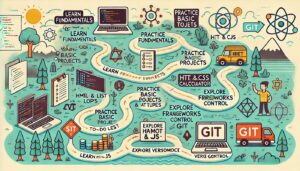
Intermediate Prompts (8–14)
Here, you begin combining logic and structure.
- Use a loop to print numbers from 1 to 10
- Store multiple values in a list or array
- Find the largest value in a list
- Write a reusable function
- Handle invalid user input gracefully
- Use conditions inside loops
- Build a simple calculator
Skills you build:
Loops, functions, logical thinking, and clean code habits.
Practical Prompts (15–20)
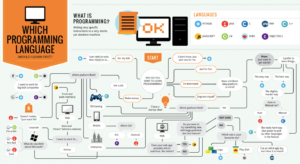 Practical Prompts (15–20)
These prompts mirror real-world use cases.
- Create a basic to-do list
- Build a number guessing game
- Convert temperatures between units
- Simulate a simple login system
- Read and display data from a file
- Create a small project combining all concepts
Skills you build:
Problem solving, program structure, and real application thinking.
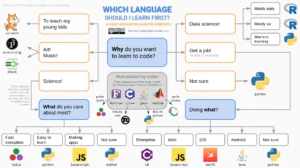
Learning With Prompts: A Simple “Recipe” Approach
Think of learning like cooking. You don’t throw everything into the pan at once.
| Learning Ingredient | Purpose | Example |
|---|---|---|
| Small Prompt | Reduces overwhelm | Print a message |
| Clear Goal | Keeps focus | One task |
| Practice Time | Builds retention | 20–30 minutes |
| Review | Reinforces learning | Improve solution |
This approach keeps learning steady and sustainable.
Best Programming Languages to Use With These Prompts
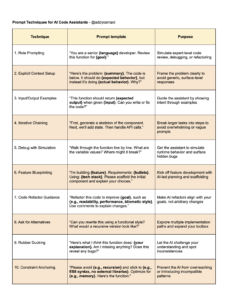
The strength of these 20 Easy Prompts for Learning New Programming Languages is flexibility. You can use them with almost any language.
Beginner-Friendly Choices
Structured Languages
No matter the language, the mental model you build stays the same.
Common Mistakes That Slow Your Progress
Even with good prompts, bad habits can hold you back.
Avoid these pitfalls:
- Copy-pasting code without understanding
- Ignoring error messages
- Switching languages too early
- Skipping fundamentals
Errors are not failures—they’re instructions.
Frequently Asked Questions
Are these 20 Easy Prompts for Learning New Programming Languages good for beginners?
Yes. They are designed specifically for beginners with no prior experience.
How much time should you spend on each prompt?
Anywhere from 15 to 45 minutes is ideal.
Can you reuse these prompts for multiple languages?
Yes. The logic applies across languages.
Do you need advanced tools?
No. A basic editor or online compiler is enough.
What’s the fastest way to learn with prompts?
Consistency. Daily practice beats long, irregular sessions.
Conclusion: Learn Smarter, Not Harder
Learning a new programming language doesn’t require genius or endless hours. It requires the right strategy. By using 20 Easy Prompts for Learning New Programming Languages, you replace confusion with clarity and hesitation with momentum.
Each prompt is a small victory. Each victory builds confidence. Over time, those small wins turn into real skill.
👉 Your next step:
Choose one language today. Start with the first prompt. Write your solution. Improve it tomorrow.
If this guide helped you, save it, share it, or comment with the language you’re learning next. Your progress starts now. 🚀