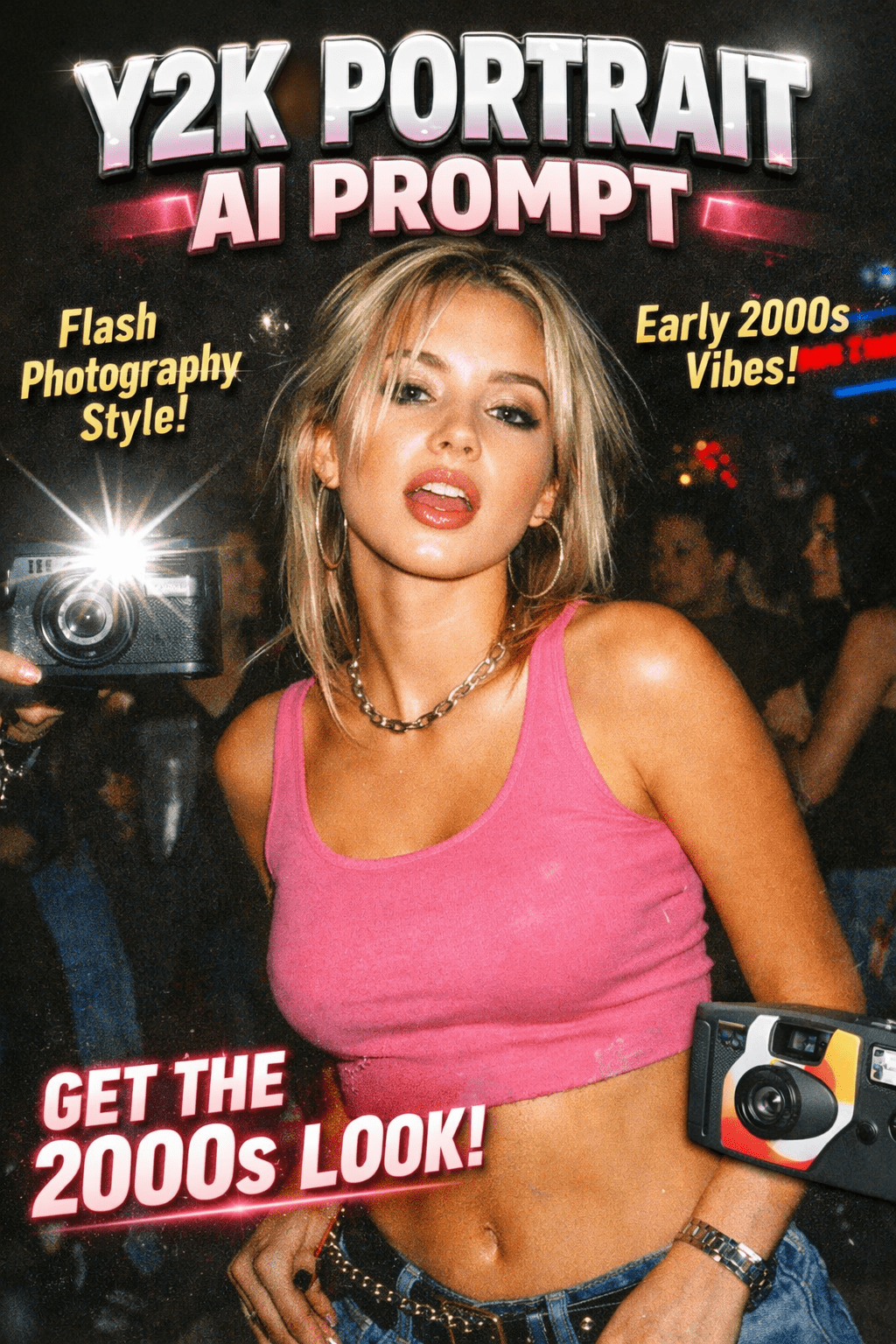
Y2K Portrait AI Prompt: Flash Photography for Authentic 2000s Style
Y2K Portrait AI Prompt: How to Master Flash Photography for Iconic 2000s-Style Images
The early 2000s weren’t polished. They weren’t cinematic. And that’s exactly why they still feel so powerful.
If you ever scrolled through old MySpace profiles, celebrity paparazzi shots, or blurry party photos taken at 2 a.m., you already understand the magic behind Y2K portrait flash photography. It was raw, direct, sometimes messy—and deeply human. Today, with AI image generation, you can recreate that same energy on demand. You just need the right Y2K portrait AI prompt.
This guide shows you exactly how to do that. You’ll learn how to write prompts that feel authentic, not artificial, and how to use flash photography language to bring back the unmistakable Y2K aesthetic.
What Makes a Y2K Portrait AI Prompt Different?
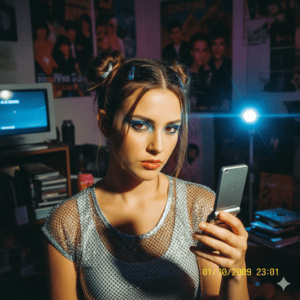
A Y2K portrait AI prompt isn’t about perfection. It’s about attitude.
Modern AI portraits often aim for smooth skin, balanced lighting, and cinematic depth. Y2K portraits reject all of that. They embrace harsh flash, awkward angles, and a sense that the photo was captured in the moment—without permission.
When you write prompts for this style, you’re not chasing realism. You’re recreating a cultural memory.
Key characteristics include:
- Direct on-camera flash
- Overexposed highlights
- Flat lighting with hard shadows
- Casual, candid poses
- Early digital or disposable camera feel
If your prompt sounds too “professional,” you’re already going in the wrong direction.
Why Flash Photography Is the Heart of the Y2K Look
Flash photography isn’t just a detail—it’s the foundation.
In the Y2K era, most portraits were taken with:
- Disposable cameras
- Early digital point-and-shoots
- Built-in flashes that couldn’t be adjusted
That flash fired straight at the subject, washing out skin tones and killing depth. What it created instead was immediacy. The image felt unfiltered and honest, even when it wasn’t flattering.
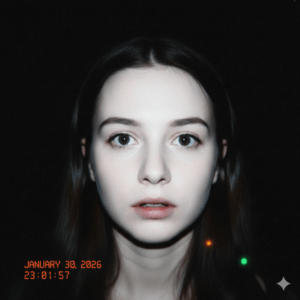
When you describe flash correctly in your AI prompt, you:
- Force the model to flatten the image
- Remove cinematic mood lighting
- Create a snapshot aesthetic instead of a studio portrait
This is why phrases like “harsh on-camera flash” or “direct flash photography” matter more than artistic adjectives.
The Anatomy of a Strong Y2K Portrait Prompt (Flash Photography)
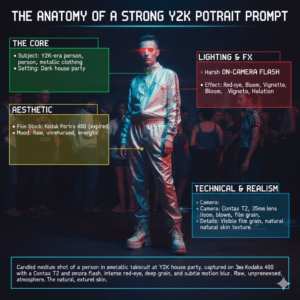
To get consistent results, your prompt needs structure. Think of it as building a recipe rather than writing a sentence.
1. Subject and Vibe
Start with who the person is and how they feel—not what they look like technically.
Examples:
- Confident teenage girl in early 2000s fashion
- Young man with a bored expression at a party
- Playful pose, candid moment, off-guard look
Avoid over-describing beauty. Y2K portraits feel casual, not curated.
2. Flash and Camera Language (Most Important)
This is where the Y2K effect is won or lost.
Use phrases like:
- Harsh on-camera flash
- Direct flash photography
- Disposable camera aesthetic
- Early 2000s digital camera
- Overexposed flash highlights
Do not mix this with:
- Soft lighting
- Studio flash
- Cinematic lighting
- Professional photography terms
The goal is to sound imperfect on purpose.
3. Environment and Background
Y2K portraits rarely happen in clean spaces.
Think:
- Nightclubs
- Street corners at night
- Bathroom mirrors
- Cars, hallways, messy rooms
These environments help AI understand the context and reinforce the flash-heavy look.
4. Texture and Image Quality
To lock in authenticity, describe flaws.
Helpful modifiers:
- Slight motion blur
- Grainy texture
- Low-resolution digital photo
- Early internet photo quality
Imperfection is your advantage here.
A Simple Y2K Portrait AI Prompt Formula
Use this structure every time:
- Subject + emotion
- Flash photography description
- Camera type
- Environment
- Texture and quality
Example Prompt
A confident young woman wearing early 2000s fashion, candid pose, harsh on-camera flash photography, disposable camera aesthetic, overexposed highlights, photographed in a nightclub at night, grainy low-resolution digital photo, raw Y2K portrait style.
This kind of prompt gives AI clear instructions without over-controlling the outcome.
Y2K Portrait Prompt “Ingredients” Table
Think of your prompt like a recipe. You can mix and match these ingredients depending on the mood you want.
| Prompt Element | Examples You Can Use |
|---|---|
| Subject | young woman, teenage boy, confident pose, candid expression |
| Lighting | harsh on-camera flash, direct flash photography |
| Camera | disposable camera, early 2000s digital camera |
| Environment | nightclub, bathroom mirror, street at night |
| Mood | nostalgic, raw, playful, rebellious |
| Texture | grainy, low resolution, imperfect |
Using a table like this helps you stay consistent while experimenting.
Advanced Modifiers for Authentic Y2K Results
Once you’re comfortable with the basics, subtle language choices can push your results further.
Try adding:
- MySpace-era portrait
- tabloid paparazzi style
- early internet photo aesthetic
These references work because they describe cultural context, not technical perfection.
What You Should Avoid
- Ultra-realistic
- 8K resolution
- Cinematic color grading
- Modern DSLR terms
These phrases cancel out the Y2K effect immediately.
Common Mistakes That Ruin Y2K Portrait AI Prompts
Even good prompts fail when they fight the aesthetic.
Watch out for:
- Over-styling the subject
- Mixing modern photography language with Y2K flash
- Forgetting to mention the camera type
- Trying to make the image “beautiful” instead of authentic
If the image looks too clean, your prompt is too safe.
Where Y2K Flash Portraits Work Best
This style isn’t just nostalgic—it’s useful.
You can apply Y2K portrait flash photography to:
- Social media visuals
- Fashion mood boards
- Album or mixtape covers
- Editorial concepts
- Character design
Because the look feels emotional and unpolished, it often connects faster than polished visuals.
Frequently Asked Questions
What is the best Y2K portrait AI prompt for flash photography?
The best prompt clearly mentions harsh on-camera flash, an early 2000s camera, and a candid environment without using modern photography terms.
How do you make AI portraits look like real Y2K flash photos?
You focus on direct flash lighting, imperfect image quality, and casual settings rather than realism or sharpness.
Why does flash matter so much in a Y2K portrait AI prompt?
Because flash defines the era. Without it, the image loses the raw, spontaneous feeling that makes Y2K portraits recognizable.
Final Thoughts: Create Feeling, Not Perfection
A strong Y2K portrait AI prompt isn’t about technical mastery—it’s about emotional accuracy. When you describe flash photography honestly, accept flaws, and let go of modern polish, your images start to feel real again.
Now it’s your turn.
Experiment. Break the rules. Write prompts that feel like memories, not instructions.
👉 Try your first Y2K portrait prompt today, adjust one element at a time, and watch how small changes transform the entire image. That’s where the real creative control begins.