How to Use ChatGPT for Market Research (Step-by-Step Guide for 2026)
How to Use ChatGPT for Market Research (Step-by-Step Guide for 2026)
Market research used to be slow, expensive, and overwhelming. You had to analyze surveys, read reports, study competitors, and still end up unsure. In 2026, that process has changed completely.
With ChatGPT, you can understand your market faster, validate ideas earlier, and reduce the risk of building something nobody wants — if you know how to ask the right questions.
This guide shows you how to use ChatGPT for market research step by step, with practical prompts you can apply immediately, whether you’re building a product, launching content, or starting a business.
Why Market Research Is Critical in 2026
Markets move fast. Trends change quickly, and user expectations evolve every few months. Guessing is no longer an option.
Good market research helps you:
- Identify real customer problems
- Validate ideas before investing time or money
- Understand competitors and gaps
- Create offers that actually convert
ChatGPT doesn’t replace real data, but it helps you analyze, structure, and interpret information faster.
Step 1: Define Your Market Clearly
Before researching anything, you need clarity. Vague markets lead to vague insights.
Prompt: Market Definition
Act as a market research analyst. Help me clearly define the target market for [idea/product], including audience type, industry, and use cases.
Use this to:
- Narrow your focus
- Avoid generic assumptions
- Start with a clear research direction
Step 2: Understand Your Target Audience
You can’t research a market without understanding the people inside it.
Prompt: Audience Persona Creation
Create a detailed customer persona for [target audience], including goals, frustrations, motivations, and buying behavior.
This helps you:
- Write better content
- Design better products
- Speak your audience’s language
Prompt: Pain Point Discovery
List the top problems and frustrations faced by [target audience] related to [topic].
Pain points are where opportunities live.
Step 3: Analyze Search Behavior & Demand

Search behavior reveals what people actually want, not what they say they want.
Prompt: Search Intent Analysis
Analyze what users searching for “[keyword]” are trying to achieve and what type of content they expect.
This helps you:
- Match intent
- Avoid misaligned ideas
- Build solutions people are already looking for
Prompt: Question Mining
Generate common questions people ask online about [topic] before making a decision.
These questions are perfect for:
- Blog content
- Landing pages
- Product positioning
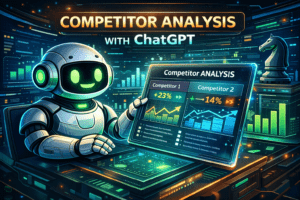
Step 4: Competitor Analysis With ChatGPT
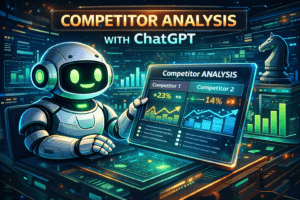
You don’t need to copy competitors — you need to understand them.
Prompt: Competitor Breakdown
Analyze typical competitors in the [industry] market and identify their strengths, weaknesses, and positioning.
This helps you:
- Avoid crowded angles
- Spot gaps
- Differentiate clearly
Prompt: Gap Identification
Identify unmet needs or gaps in the current market for [product/idea].
This is where innovation starts.
Step 5: Idea Validation Before You Build

Most ideas fail because they’re never validated.
Prompt: Idea Validation
Evaluate this idea: [idea]. Analyze demand, potential audience interest, and risks.
Use this before:
- Building a product
- Writing a full content series
- Launching a service
Prompt: Objection Prediction
List possible objections or reasons people might not buy or adopt this solution.
Knowing objections early saves money later.
Step 6: Pricing & Positioning Research
Pricing is part psychology, part strategy.
Prompt: Pricing Strategy
Suggest pricing models for [product/service] based on perceived value and market standards.
Prompt: Value Proposition Refinement
Help me refine a clear value proposition for [idea] that resonates with [target audience].
Clear positioning beats clever slogans.
Step 7: Trend & Opportunity Analysis
Markets don’t stay static.
Prompt: Trend Identification
Identify emerging trends in the [industry] market for 2026.
Prompt: Opportunity Forecast
Based on current trends, suggest future opportunities in this market.
This helps you stay ahead instead of reacting late.
Common Mistakes When Using ChatGPT for Market Research
Avoid these errors:
- Treating ChatGPT as a data source instead of an analysis tool
- Asking vague or broad questions
- Skipping validation steps
- Ignoring real-world feedback
ChatGPT works best when you guide it with clear context and specific prompts.
How to Combine ChatGPT With Real Data
For best results:
- Use ChatGPT to structure insights
- Validate with Google Trends, forums, reviews, and analytics
- Compare assumptions with real behavior
Think of ChatGPT as your research assistant, not the final judge.
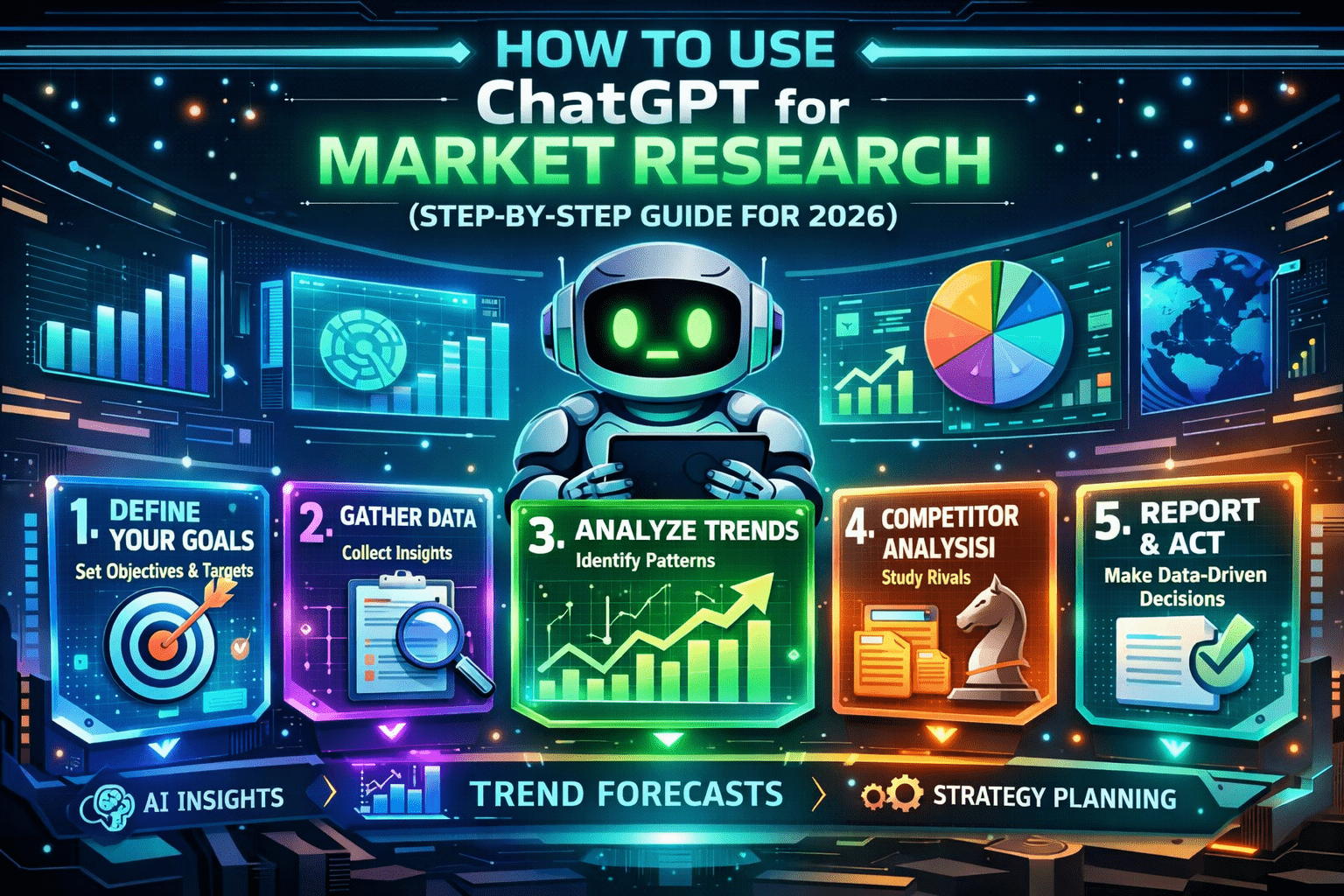
Practical Workflow You Can Use Today
- Define the market
- Understand the audience
- Analyze demand
- Study competitors
- Validate ideas
- Refine positioning
Repeat this process for every new idea.
Final Thoughts
Market research in 2026 doesn’t reward guesswork. It rewards clarity, speed, and insight. With the right ChatGPT prompts, you can reduce uncertainty, move faster, and make smarter decisions — without overcomplicating the process.
Used correctly, ChatGPT helps you think better, not just faster.