
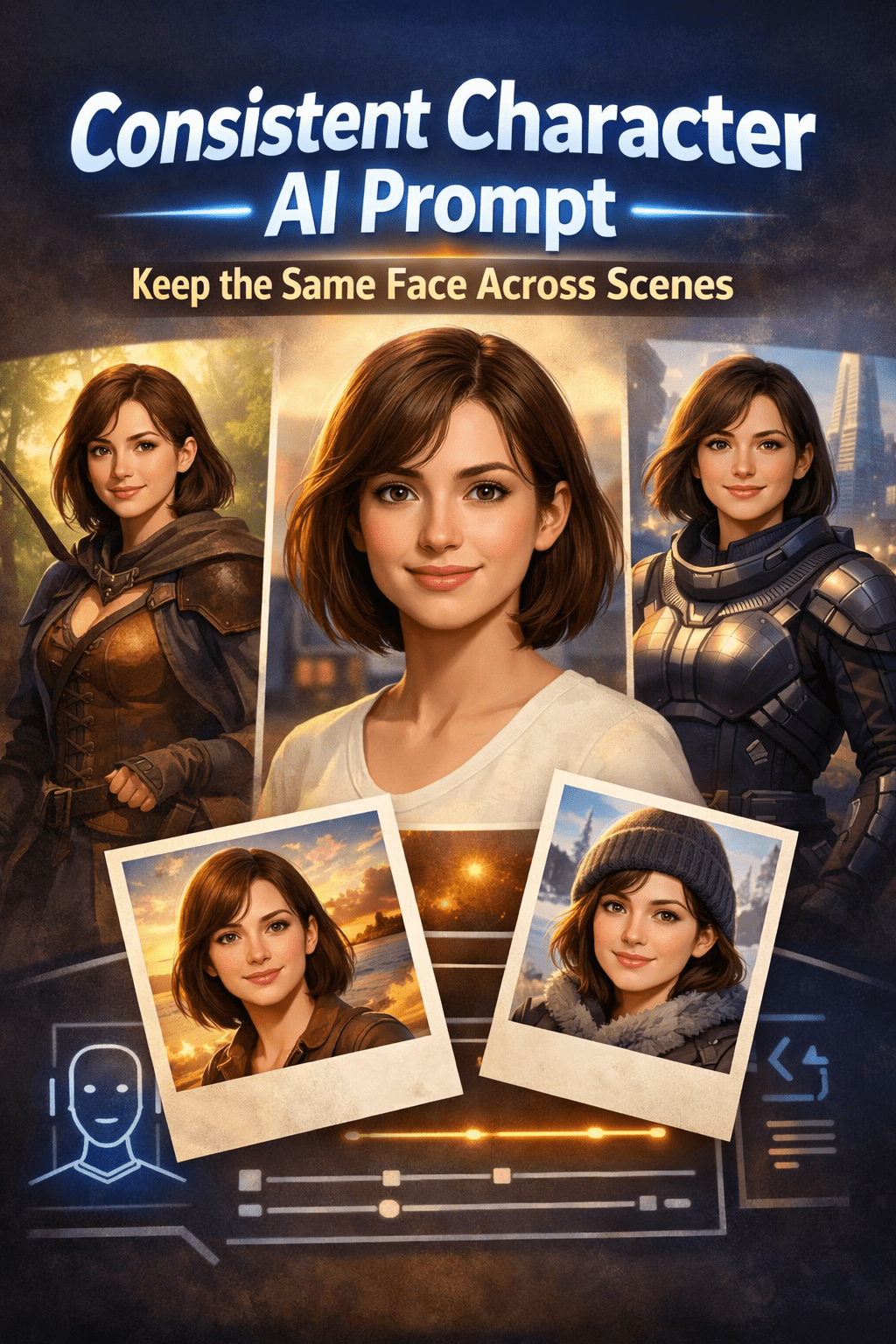
Consistent Character AI Prompt: Keep the Same Face Across Scenes
Consistent Character AI Prompt: How to Keep the Same Face Across Scenes Without Losing Identity
Creating AI images is exciting—until your character suddenly looks like a different person in every new scene. One image feels perfect, the next feels off, and by the third, the face no longer matches the story you’re trying to tell. If you’ve faced this problem, you’re not alone. The challenge of maintaining a consistent face prompt across scenes is one of the most common struggles for AI artists, storytellers, and creators.
The good news? This problem isn’t random, and it’s not a limitation you have to accept. Once you understand how AI interprets faces and how to structure a consistent character AI prompt, you can keep the same identity across multiple scenes while still changing poses, emotions, lighting, and environments.
This guide will show you exactly how to do that—step by step.
What Does “Consistent Face Prompt Across Scenes” Really Mean?
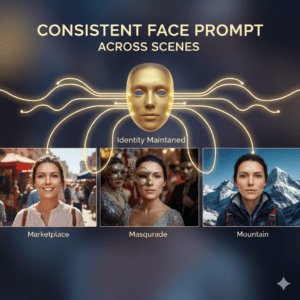
A consistent face prompt across scenes means that your AI-generated character keeps the same facial identity—not just similar vibes—throughout different images. You want the same bone structure, proportions, and recognizable traits, even when:
- The background changes
- The character’s expression shifts
- The lighting or camera angle is different
- The scene mood evolves
This is not about copying the same image. It’s about preserving identity while allowing visual storytelling to move forward.
Why Face Consistency Matters More Than You Think
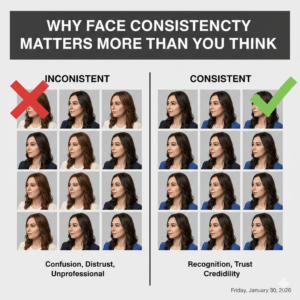
When a face changes unexpectedly, it breaks immersion. Your brain notices immediately—even if you can’t explain why.
Face consistency matters because it directly affects:
- Storytelling clarity – One character should feel like one person, not multiple versions
- Brand recognition – A recurring character becomes memorable only when the face stays stable
- Professional quality – Inconsistent faces look unfinished and amateur
If you’re building a visual series, a comic, a game concept, or even social media content, a solid consistent character AI prompt is not optional—it’s foundational.
How AI Interprets Faces (And Why They Change)
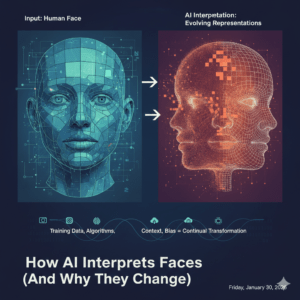
AI models don’t remember faces like humans do. They don’t “recognize” a character unless you tell them exactly how.
Instead, AI generates faces based on:
- Probability patterns
- Descriptive tokens in your prompt
- Visual dominance (lighting, angle, emotion can override features)
When you slightly change your wording, the AI may prioritize new details over identity. That’s why rewriting facial descriptions—even with synonyms—often leads to a different-looking face.
The Core Principle: Identity First, Scene Second
To keep a face consistent across scenes, you must separate who the character is from what the character is doing.
Think of your prompt in two layers:
- Identity Layer (Never changes)
- Scene Layer (Changes freely)
Most people mix these together. That’s where inconsistency starts.
How to Build a Consistent Character AI Prompt
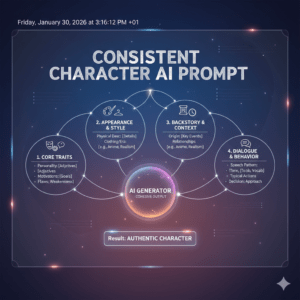
1. Create a Fixed Identity Description
This is your character’s “DNA.” You will reuse this text exactly—word for word—in every prompt.
Your identity description should include:
- Face shape (oval, angular, round, long)
- Skin tone (specific, not vague)
- Eye shape and color
- Nose type
- Jawline definition
- Age range
Important rule:
Once written, never rewrite this section. Not even slightly.
2. Keep Descriptions Concrete, Not Artistic
Instead of emotional or poetic descriptions, use neutral, physical traits.
Bad example:
- “A mysterious, expressive face with deep emotions”
Better example:
- “An oval face with a soft jawline, medium skin tone, almond-shaped brown eyes, straight nose, and subtle cheekbones”
Concrete descriptions give AI less room to improvise.
3. Change Scenes Without Touching Identity
Once your identity block is locked, you can safely change:
- Location
- Clothing
- Pose
- Expression
- Time of day
- Lighting
As long as your face description stays untouched, the character will remain recognizable.
Prompt Structure That Works Across Scenes
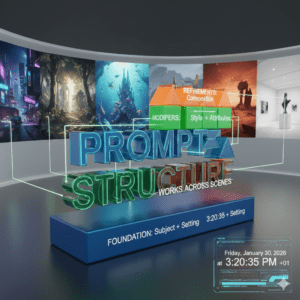
A clean structure improves consistency and readability for AI.
Recommended order:
- Fixed identity description
- Camera framing
- Scene and environment
- Lighting and mood
- Action or emotion
This hierarchy ensures the face remains the highest priority.
Common Mistakes That Break Face Consistency
Even experienced users fall into these traps:
- Rephrasing facial features with synonyms
- Adding too many emotional descriptors
- Changing realism level mid-series
- Mixing illustration and photo realism
- Using extreme camera angles too early
If your face keeps drifting, check whether you’ve accidentally changed the identity layer.
Advanced Tips for Consistent Face Prompts Across Scenes
Once you master the basics, these techniques can help refine results even further.
Use Reinforcement Phrases Carefully
Short reminders like:
- “same facial structure”
- “unchanged facial identity”
can help, but they don’t replace a strong base description.
Limit Chaos and Variation
If your tool allows it, reduce randomness. High variation values often override facial details.
Test Incrementally
Change one variable at a time:
- First background
- Then lighting
- Then expression
This helps you see exactly what affects facial stability.
Real-World Use Cases for Consistent Character AI Prompts
A consistent face prompt across scenes is especially powerful for:
- Visual storytelling and comics
- AI short films
- Character design portfolios
- Brand mascots
- Educational or explainer visuals
In all these cases, consistency builds trust and emotional connection.
FAQ: Consistent Character AI Prompt
How do you keep the same face across multiple AI images?
You keep the facial identity description fixed and separate it from scene details.
Why does the face change even when the prompt looks similar?
AI reacts strongly to wording changes, lighting, and emotional emphasis, which can override facial traits.
Can you change emotions without changing the face?
Yes—if facial structure remains unchanged and emotions are described lightly.
Does a consistent character AI prompt work across different models?
The principle works everywhere, but each model responds differently to detail strength and order.
Conclusion: Consistency Is a Skill You Can Learn
Keeping a face consistent across scenes is not about luck or endless retries. It’s about structure, discipline, and understanding how AI reads your prompts.
Once you master the consistent character AI prompt, you stop fighting the model and start directing it. Your characters become recognizable. Your stories feel cohesive. And your images finally work together as a complete visual narrative.
Your Next Step (Call to Action)
Now it’s your turn.
Take one character you’ve already created and rewrite your prompt using the identity-first method from this guide. Test it across three different scenes and compare the results.
If you want:
- Ready-to-use character prompt templates
- Scene variation examples
- Platform-specific prompt optimizations
👉 Save this guide, apply it today, and start building characters that actually stay the same.
Consistency is what turns images into stories—and stories into something people remember.