How to Create a Hyper-Realistic Underwater Portrait Prompt
The hyper-realistic underwater portrait prompt is a powerful tool for creating stunning, cinematic imagery that blends realism with surreal effects. By focusing on intricate details, dramatic lighting, and underwater elements, you can craft visually captivating portraits that stand out. Whether you’re creating artwork for your portfolio, crafting thumbnails for social media, or designing conceptual art, this prompt can be adapted for various creative needs. Let’s explore five examples of how to use this prompt and customize it for different styles and projects.
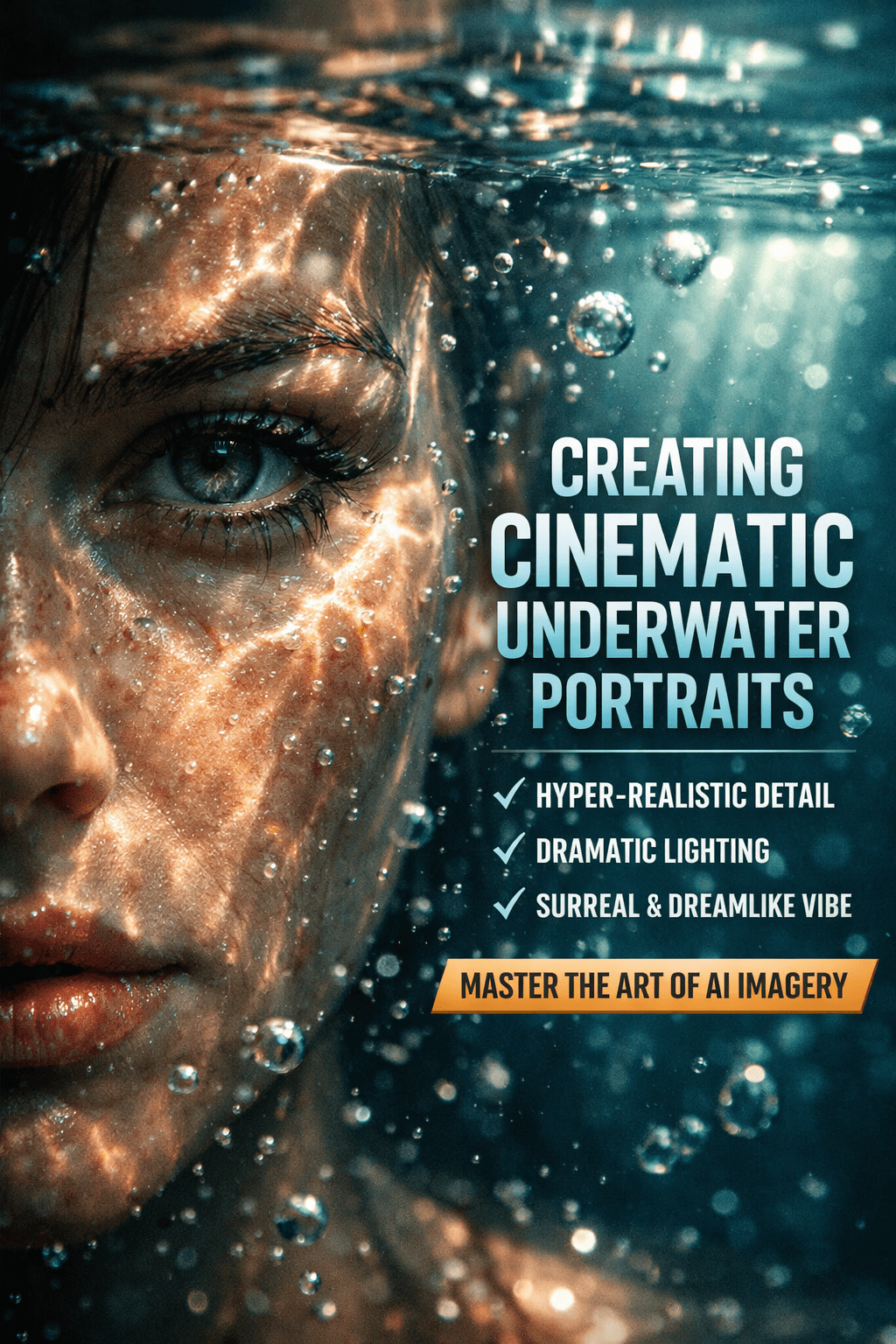
How to Create a Hyper-Realistic Underwater Portrait That Feels Cinematic and Dreamlike If you want to push AI image generation beyond “nice visuals” and into the realm of gallery-level digital art, this prompt is a masterclass. It combines hyper-realism, cinematic lighting, underwater physics, and emotional storytelling in a single, tightly controlled composition. In this guide, you’ll learn how and why this prompt works, how to adapt it for different styles and platforms, and how to use it to create images that stand out in search results, portfolios, and social media feeds.
You’re not just generating an image you’re designing a visual experience.
Why This Prompt Is So Powerful
At first glance, the prompt feels long and technical. That’s intentional. Each phrase plays a role in guiding the AI toward a specific visual outcome instead of a generic underwater portrait.
Here’s what makes it effective:
- Strong subject framing (only the left half of the face)
- Clear focal point (one eye in sharp focus)
- Physical realism (water droplets, bubbles, subsurface scattering)
- Cinematic mood (light rays, caustic patterns, soft shadows)
- Controlled perspective (underwater macro, shallow depth of field)
- Defined format (3:4 aspect ratio)
When all these elements work together, you get an image that feels intentional, emotional, and believable.
Breaking Down the Prompt Step by Step
Understanding the structure helps you reuse and remix it without losing quality.
Classic Cinematic Underwater Portrait
Prompt:
“Hyper-realistic, ultra-detailed close-up portrait showing only the left half of my face submerged in water, one eye in sharp focus, positioned on the far left of the frame, light rays creating caustic patterns on the skin, suspended water droplets and bubbles adding depth, cinematic lighting with soft shadows and sharp highlights, photorealistic textures including skin pores, wet lips, eyelashes, and subtle subsurface scattering, surreal and dreamlike atmosphere, shallow depth of field, underwater macro perspective. 3:4 aspect ratio.”
Use Case:
Perfect for creating dramatic and cinematic portraits in portfolios, exhibitions, or high-end digital art showcases. This version focuses on maintaining the realism and intensity of the underwater environment while using subtle surreal elements to create a captivating visual.
How to Use:
Use this version when you want to make a strong first impression in a professional setting or create content that emphasizes technical proficiency and artistic flair.

Dreamy, Soft Underwater Mood
Prompt:
"Hyper-realistic, ultra-detailed close-up portrait showing only the left half of my face submerged in water, one eye in sharp focus, positioned on the far left of the frame, soft, ethereal light rays creating subtle caustic patterns on the skin, delicate water droplets and gentle bubbles adding depth, soft cinematic lighting with minimal shadows and soft highlights, photorealistic textures including wet lips and eyelashes, calm and surreal atmosphere, shallow depth of field, underwater macro perspective. 3:4 aspect ratio."
Use Case:
Great for creating a gentle, calming portrait. Ideal for projects that require a serene and tranquil vibe such as meditation apps, wellness blogs, or fashion photography where subtlety and elegance are key.
How to Use:
By adjusting the lighting to a softer tone and reducing harsh shadows, you can create a portrait that feels gentle and inviting, perfect for wellness-oriented brands or personal brand imagery that conveys peacefulness and calm.

High-Contrast, Dark Underwater Portrait
Prompt:
"Hyper-realistic, ultra-detailed close-up portrait showing only the left half of my face submerged in water, one eye in sharp focus, positioned on the far left of the frame, dark, dramatic light rays creating deep caustic patterns on the skin, heavy water droplets and larger bubbles adding depth, intense cinematic lighting with high shadows and sharp highlights, photorealistic textures including skin pores, wet lips, eyelashes, and subtle subsurface scattering, moody, dark surreal atmosphere, shallow depth of field, underwater macro perspective. 3:4 aspect ratio."
Use Case:
Perfect for moodier portraits or when you want to evoke intensity and mystery. Ideal for dark-themed editorial projects, thriller films, or dramatic fashion photography.
How to Use:
Increase the contrast between the light and dark areas to create a highly dramatic effect. This version is perfect for content related to emotional storytelling or mystical, edgy visuals.

Romantic Underwater Portrait
Prompt:
"Hyper-realistic, ultra-detailed close-up portrait showing only the left half of my face submerged in water, one eye in sharp focus, positioned on the far left of the frame, soft romantic light rays creating caustic patterns on the skin, gentle water droplets and small bubbles adding depth, soft cinematic lighting with delicate highlights, photorealistic textures including wet lips, eyelashes, and subtle subsurface scattering, romantic and dreamy atmosphere, shallow depth of field, underwater macro perspective. 3:4 aspect ratio."
Use Case:
This is great for romantic and whimsical projects, like love-themed websites, engagement announcements, or fashion campaigns aimed at young couples.
How to Use:
By softening the lighting and adding more gentle effects, this version gives off a romantic and ethereal vibe, perfect for visuals meant to evoke intimacy and affection.

Futuristic Underwater Portrait
Prompt:
"Hyper-realistic, ultra-detailed close-up portrait showing only the left half of my face submerged in water, one eye in sharp focus, positioned on the far left of the frame, sharp digital light rays creating glowing caustic patterns on the skin, suspended holographic bubbles and liquid droplets adding depth, neon-lit cinematic lighting with bold highlights and shadows, photorealistic textures including skin pores, wet lips, eyelashes, and subtle subsurface scattering, futuristic surreal atmosphere, shallow depth of field, underwater macro perspective. 3:4 aspect ratio."
Use Case:
Perfect for futuristic or sci-fi projects that want to mix underwater elements with high-tech vibes. Use this for advertisements for tech products, futuristic art exhibitions, or concept art for films and games.
How to Use:
Focus on adding neon or glowing effects to the light rays and bubbles. The bold futuristic feel combined with underwater imagery makes this version ideal for sci-fi and high-tech branding.
1. Hyper-Realistic, Ultra-Detailed Close-Up
This opening sets the quality ceiling. You’re telling the AI that realism matters more than stylization. Words like ultra-detailed and photorealistic textures push the model to focus on micro-details such as:
- Skin pores
- Wet lips
- Eyelashes clumped by water
- Natural imperfections
If you skip this part, the output often looks smooth or artificial.
2. Only the Left Half of the Face
This is a compositional constraint, and it’s crucial.
By showing only half the face:
- You create mystery
- You guide the viewer’s eye naturally
- You avoid symmetry, which often looks artificial in AI art
Placing the face on the far left of the frame also leaves negative space, making the image feel cinematic rather than crowded.
3. One Eye in Sharp Focus
This detail controls emotional impact.
A single sharp eye:
- Anchors attention
- Creates intimacy
- Adds realism through shallow depth of field
Everything else softly fades, mimicking real macro photography underwater.
4. Submerged in Water: Physics Matter
Water isn’t just a background—it’s a character.
The prompt includes:
- Suspended droplets
- Floating bubbles
- Light refraction
- Caustic patterns on skin
These cues help the AI simulate underwater physics, which is often where low-quality images fail. When done right, the viewer can almost feel the water.
5. Cinematic Lighting with Caustics
Light rays underwater behave differently, and this prompt leverages that.
Caustic patterns:
- Add motion to still images
- Enhance realism
- Create a dreamlike glow on skin
Soft shadows and sharp highlights mimic professional underwater photography and film lighting.
6. Surreal but Believable Atmosphere
The image walks a fine line between realism and surrealism.
You’re not asking for fantasy elements—you’re asking for:
- A dreamlike mood
- Subtle emotional tension
- A quiet, suspended moment
This balance is perfect for editorial visuals, art projects, and high-end thumbnails.
Best Use Cases for This Prompt
You can repurpose this prompt across multiple creative and commercial contexts.
Ideal for:
- AI art portfolios
- Cinematic YouTube thumbnails
- Concept art and mood boards
- Website hero images
- Digital storytelling projects
- High-end stock imagery
Because it’s visually striking, it performs well in image search results and on visually driven platforms.
How to Customize the Prompt Without Losing Quality
You don’t need to rewrite everything. Small changes can create entirely new moods.
Style Variations You Can Try
- Replace cinematic lighting with soft natural daylight
- Add black background for more contrast
- Specify female or male face for clarity
- Introduce calm expression or intense gaze
- Swap surreal and dreamlike with dark and dramatic
Always keep:
- The close-up framing
- The single eye focus
- The underwater physics
Those are the backbone of the prompt.
Aspect Ratio: Why 3:4 Works So Well
The 3:4 aspect ratio is ideal for portraits because:
- It emphasizes vertical composition
- It feels natural on mobile screens
- It works well for Pinterest, Instagram, and editorial layouts
If you’re targeting thumbnails, you can later crop strategically without losing the focal point.
SEO Value of Content Like This
From an SEO perspective, this type of content performs well because:
- It answers how-to and why questions
- It targets long-tail keywords naturally
- It appeals to visual creators, designers, and AI artists
- It encourages longer on-page time
By explaining the logic behind the prompt, you provide value—not just inspiration.
Common Mistakes to Avoid
Even with a strong prompt, results can suffer if you overlook details.
Avoid:
- Removing realism keywords
- Overloading with too many styles
- Ignoring composition placement
- Forgetting focal depth
- Using vague lighting descriptions
Precision beats creativity when realism is your goal.
Final Thoughts: Turn Prompts into Visual Stories
This prompt works because it treats image generation like filmmaking. Every word directs the camera, the light, and the emotion. When you use prompts this intentionally, you stop generating random images and start crafting visual narratives.
If you want your AI-generated portraits to feel human, cinematic, and unforgettable, this structure is one you’ll come back to again and again.
Ready to Level Up?
Try adapting this prompt today, test small variations, and build a consistent visual style around it. If you found this breakdown useful, save it, share it, and explore how far a single well-written prompt can really take your creative work.