
Lifestyle product photography prompt in kitchen scene
Master the Art of the Lifestyle Product Photography Prompt in Kitchen Scenes
Imagine walking into a kitchen at 8:00 AM. The sun is slicing through the window, catching the steam rising from a ceramic mug. There is a half-peeled orange on the counter and a linen towel draped carelessly over a wooden stool. You can almost smell the citrus and the roasted coffee. This isn’t just a room; it’s a mood.
As a creator or brand owner, your goal is to bottle that feeling. But often, when you sit down to generate an image or brief a photographer, the result feels “uncanny valley”—too perfect, too sterile, and ultimately, unconvincing. To bridge this gap, you need to master the lifestyle product photography prompt in kitchen scene. By the end of this guide, you’ll know how to direct AI or a lens to create kitchen imagery that doesn’t just show a product, but sells a lifestyle.
The Psychology of the Kitchen Setting

Before you type a single word into a prompt box, you have to understand why the kitchen is the “holy grail” of product placement. In marketing, the kitchen represents nourishment, family, and the start of a journey.
When you place a product—whether it’s a high-end blender, a artisanal soap, or a smart home device—in a kitchen, you are performing a “mental installation” for your customer. You are showing them exactly where this item will live in their world. If the scene feels authentic, the product feels essential.
Why “Lifestyle” Beats “Studio White”
Trust: Shadows and “lived-in” textures suggest the product is actually used.
Aspiration: You aren’t just selling a knife; you’re selling the life of someone who chops fresh herbs on a Sunday afternoon.
Retention: Human brains process lifestyle scenes faster and retain the visual information longer than isolated objects.
Breaking Down the Lifestyle Product Photography Prompt in Kitchen Scene
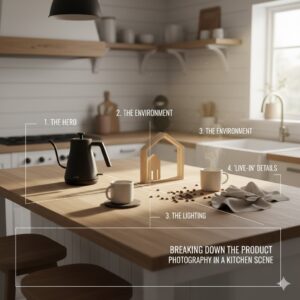
To get a result that looks like a high-end magazine spread rather than a stock photo, you need a structured approach. A professional-grade prompt is built in layers.
1. The Hero (The Subject)
Be specific. Instead of “a kettle,” try “a matte charcoal electric kettle with a gooseneck spout.” The more detail you provide about the product’s texture and material, the more the lighting will interact with it realistically.
2. The Environment (The Kitchen Style)
The “kitchen” is a broad term. You need to define the architecture.
Modern Industrial: Think exposed brick, black fixtures, and concrete counters.
Cottagecore: Think open shelving, mismatched ceramics, and jars of dried sourdough starter.
Scandinavian: Think light oak, white walls, and extreme minimalism.
3. The Lighting (The Secret Sauce)

Lighting is the difference between a $10 photo and a $1,000 photo. For a lifestyle product photography prompt in kitchen scene, always specify the light source.
Volumetric lighting creates those beautiful “god rays.”
Soft-box lighting mimics a professional studio.
Golden hour glow adds warmth and nostalgia.
Crafting Your “Visual Recipe”
Just like a good meal, a great image needs the right balance of ingredients. Use the table below to mix and match elements for your next prompt.
Product Photography Component Table
| Component | Option A: The “Bright & Airy” | Option B: The “Moody & Organic” | Option C: The “Ultra-Modern” |
| Surface | White Marble | Reclaimed Barn Wood | Polished Black Granite |
| Background | Subway tiles, herb garden | Dark teal walls, copper pans | Glass backsplash, LED strips |
| Props | Fresh lemons, white peonies | Flour dust, cracked eggshells | Chrome utensils, espresso shot |
| Camera Angle | Eye-level (conversational) | Top-down (flat lay) | Low-angle (heroic/grand) |
4 Advanced Prompt Templates to Try Right Now
If you are using AI tools like Midjourney, DALL-E 3, or Stable Diffusion, copy and adapt these templates to see immediate improvements in your output.
The “Morning Ritual” (Best for Beverage/Health Products)
“Professional lifestyle product photography of a [Product Name] on a light wood kitchen island. Soft morning sun through a window, visible dust motes in the light, a half-eaten avocado toast on a ceramic plate nearby. Shallow depth of field, blurred background of a high-end kitchen, 8k resolution, highly detailed textures.”

The “Chef’s Counter” (Best for Cookware/Food)
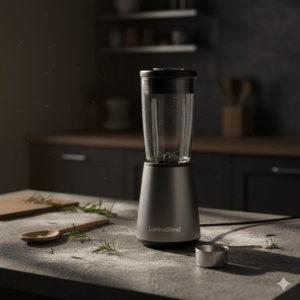
“Close-up hero shot of [Product Name] in a dark, moody kitchen. A dusting of flour and scattered rosemary leaves on a slate countertop. Side-lighting creating dramatic shadows. Cinematic atmosphere, authentic ‘messy’ kitchen vibes, f/2.8 aperture, shot on 35mm lens.”
The “Clean & Green” (Best for Cleaning/Eco-Products)
“A lifestyle product photography prompt in kitchen scene featuring a [Product Name] next to a farmhouse sink. Eucalyptus branches in a glass vase, bright natural lighting, water droplets on the surface, crisp and airy aesthetic, minimalist decor.”
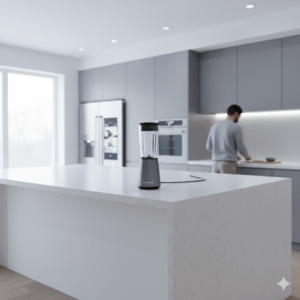
The “Tech-Integrated” (Best for Gadgets)
“Wide angle shot of a modern smart kitchen. [Product Name] sits on a sleek island. Under-cabinet LED lighting, blurred figure of a person in the background preparing a meal. High-tech, clean lines, 4k, photorealistic.”
Pro-Tips for Bypassing the “AI Look”
One of the biggest struggles with the lifestyle product photography prompt in kitchen scene is that AI tends to make things too symmetrical and clean. To make your images look like a human shot them, add these “imperfection” keywords:
“Asymmetrical composition”: Stops the AI from putting everything dead center.
“Motion blur”: Suggests a hand just moved out of frame or a pot is simmering.
“Incidental clutter”: Mention a stray set of keys or a kitchen timer to ground the scene in reality.
“Tactile textures”: Specifically call out the grain in the wood or the condensation on a cold glass.
FAQ: Optimizing Your Kitchen Visuals
What is the best aspect ratio for a kitchen lifestyle shot?
For website headers, use 16:9. For social media engagement (Instagram/Pinterest), a vertical 4:5 ratio works best as it takes up more “real estate” on the user’s screen.
How do I ensure my product remains the focal point in a busy kitchen?
Use the term “shallow depth of field” or “bokeh” in your prompt. This keeps the product sharp while blurring the cabinets and background props, guiding the viewer’s eye exactly where you want it.
Why is my “lifestyle product photography prompt in kitchen scene” coming out blurry?
Check your prompt for conflicting terms. If you ask for a “wide-angle shot” but also “macro detail,” the AI may struggle. Pick one perspective and stick to it. Also, ensure you aren’t over-complicating the prop list—too many items can confuse the focal point.
Conclusion: Putting the Pieces Together
Creating a world-class lifestyle product photography prompt in kitchen scene is about more than just listing objects. It is about directing a story. You are the director, the lighting technician, and the set stylist all in one. By choosing a specific aesthetic—whether it’s the crisp whites of a modern condo or the warm shadows of a country home—you provide the context your product needs to shine.
Don’t settle for “good enough.” The digital space is crowded, and your audience’s eyes are trained to skip over anything that feels like a generic ad. Give them a scene that feels like home, and they’ll give you their attention.
Ready to transform your brand’s visual identity?
Pick one of the prompt templates above and try it with your product today! If you’re struggling with a specific material like glass or chrome, let me know—I can help you refine the technical keywords to get that perfect, glare-free finish.
Would you like me to generate a custom set of 5 prompts specifically tailored to your product’s brand colors and target audience?