Editorial Fashion Portrait AI Prompt Using Studio Gel Lights
Editorial Fashion Portrait AI Prompt: Studio Gel Lights Explained for Stunning Results
Why Your AI Fashion Portraits Deserve More Than “Good Enough”
You’ve probably been there. You type a prompt, hit generate, and the result looks… fine. Sharp, clean, technically correct—but it lacks soul. It doesn’t feel like something torn from a high-fashion magazine or pinned to a creative director’s mood board. What’s missing is usually not the model, the outfit, or even the AI tool. It’s the lighting story.
That’s where an editorial fashion portrait AI prompt combined with studio gel lights changes everything. When you understand how to describe gel lighting properly in your prompts, your images stop looking generic and start feeling intentional, emotional, and editorial. This guide shows you exactly how to do that—step by step—so you can create fashion portraits that actually stand out.

What Makes an Editorial Fashion Portrait Different?
An editorial fashion portrait isn’t just a picture of a model wearing stylish clothes. It’s a visual narrative. When you generate editorial-style images with AI, your goal is not perfection—it’s presence.
Editorial portraits usually share a few key traits:
- A strong mood or emotional direction
- Purposeful imperfections (shadow, contrast, tension)
- Storytelling through pose, styling, and light
- Lighting that feels designed, not accidental
If your AI portraits look flat, overly balanced, or lifeless, it’s often because the lighting is neutral by default. Studio gel lights help you break that neutrality and introduce intention.
Understanding Studio Gel Lights in Fashion Imagery
Studio gel lights are colored filters placed over light sources. In traditional photography, photographers use them to tint light without changing its intensity. In AI prompts, gels work the same way—if you describe them correctly.

Why Gel Lights Matter in Editorial Fashion
Color immediately triggers emotion. In fashion editorials, lighting color is rarely random.
- Red gels suggest power, tension, or desire
- Blue gels feel cold, futuristic, or introspective
- Magenta and purple feel luxurious and avant-garde
- Mixed gels create contrast and visual hierarchy
When you include studio gel lights in your editorial fashion portrait AI prompt, you give the model a mood to work with instead of leaving it guessing.
How to Describe Studio Gel Lights in an AI Prompt

This is where most people go wrong. Writing “colorful lighting” or “neon lights” is too vague. Editorial results come from specific direction.
Use Color + Placement Together
Instead of listing colors, connect each color to a light source and position.
Examples you can adapt:
- Deep red gel backlight creating dramatic edge highlights
- Cool blue gel rim light separating subject from background
- Soft neutral key light to preserve natural skin tones
This approach mirrors how real fashion photographers work—and AI responds surprisingly well to it.
The Editorial Fashion Portrait AI Prompt Structure
To get consistent results, your prompt should follow a clear structure. Think of it like a recipe.
Core Prompt Framework
- Subject description
Who is in the frame, and what defines them visually? - Fashion styling
Editorial clothing, textures, and silhouettes. - Pose and expression
Relaxed, powerful, distant, confrontational, etc. - Studio environment
Minimal studio, seamless backdrop, dark editorial set. - Studio gel lighting setup
Colors, positions, and intensity. - Camera language
Lens type, depth of field, framing. - Editorial quality tags
Magazine-style, cinematic, high-fashion finish.
Editorial Fashion Portrait Prompt “Ingredients” Table

Using a table helps you build prompts faster and stay consistent.
| Prompt Element | What You Describe | Example |
|---|---|---|
| Subject | Model & features | high-fashion model with sharp cheekbones |
| Wardrobe | Clothing & texture | structured blazer, matte fabric |
| Lighting | Gel colors & placement | red gel backlight, blue rim light |
| Mood | Emotional tone | moody, cinematic, editorial |
| Camera | Lens & framing | 85mm lens, shallow depth of field |
| Quality | Finish | fashion editorial, ultra-detailed |
When you treat your prompt like a formula instead of a paragraph, your results become repeatable.
Example: Editorial Fashion Portrait AI Prompt with Gel Lights
Here’s a full example you can study and adapt:
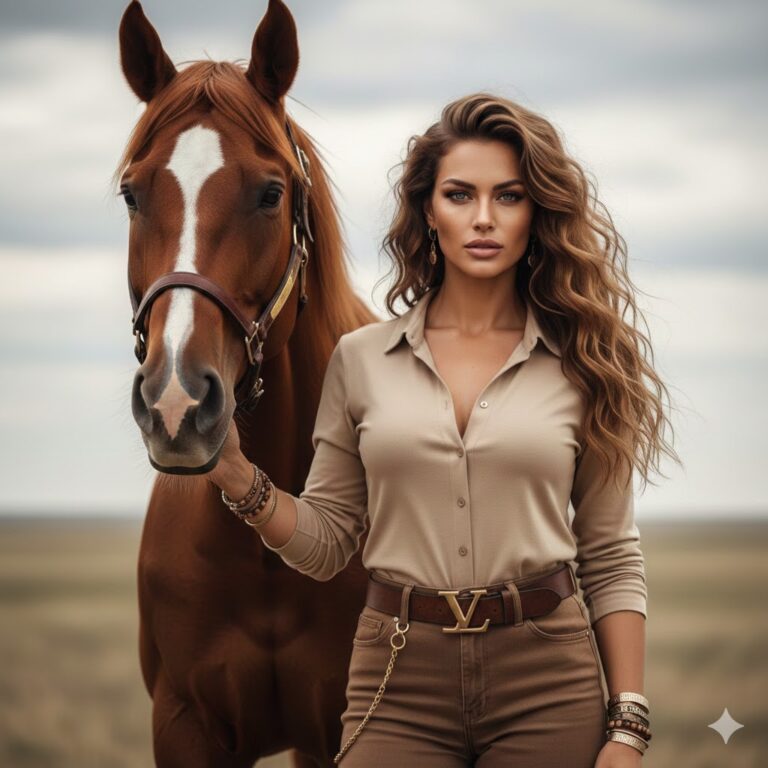
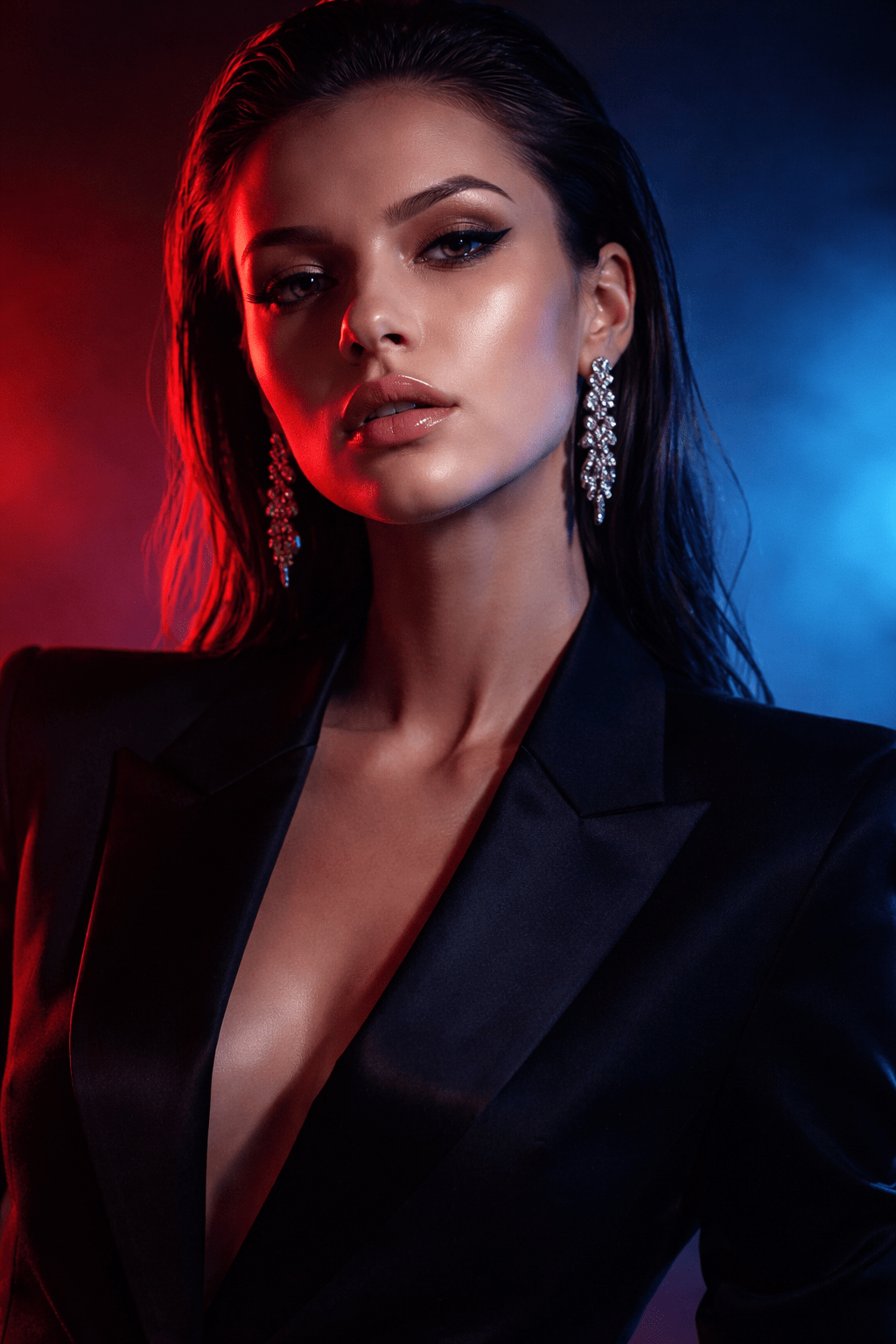
Editorial fashion portrait of a high-fashion model wearing a structured black blazer, minimal jewelry, intense confident expression, photographed in a dark studio environment. Dramatic red gel backlight creating bold edge highlights, cool blue gel rim light separating the subject from the background, soft neutral key light preserving natural skin tones. Cinematic contrast, deep shadows, magazine-style fashion editorial, shot on 85mm lens, shallow depth of field, ultra-detailed, professional studio photography.
Notice how each lighting choice has a job. That’s the secret.
Common Mistakes to Avoid
Even strong prompts can fail if you fall into these traps.
Lighting Mistakes
- Listing too many colors without direction
- Using gels on every light source
- Forgetting a neutral key light for skin tones
Editorial Style Mistakes
- Overly generic fashion descriptions
- No emotional or narrative direction
- Conflicting mood keywords (soft and harsh together)
When in doubt, simplify. One or two gel colors are usually enough.
SEO Keywords to Use Naturally
To help your article (and your prompts) perform well, weave these terms naturally:
- editorial fashion portrait AI prompt
- editorial fashion portrait prompt studio gel lights
- fashion editorial lighting
- studio gel lighting portrait
- cinematic fashion portrait AI
Avoid stuffing. One clear mention per section is usually enough.
Frequently Asked Questions
What is the best editorial fashion portrait AI prompt?
The best editorial fashion portrait AI prompt clearly defines subject, styling, lighting, and mood. Studio gel lights are essential for adding emotional depth and editorial contrast.
How do studio gel lights improve AI fashion portraits?
Studio gel lights introduce color contrast, mood, and visual hierarchy, making AI portraits feel intentional and magazine-ready instead of flat.
Can beginners use editorial fashion portrait prompts?
Yes. When you follow a structured prompt formula and use simple gel lighting descriptions, even beginners can achieve professional-looking results.
Conclusion: Turn Your Prompts into Editorial Statements
When you stop treating prompts like guesses and start treating them like creative direction, everything changes. An editorial fashion portrait AI prompt paired with well-described studio gel lights gives you control over mood, emotion, and storytelling. You’re no longer generating images—you’re directing them.
Your Next Step (Call to Action)
Now it’s your turn. Take one of your existing prompts and rewrite it using:
- One clear mood
- One or two gel light colors
- Precise lighting placement
Generate again and compare the difference. If you want more advanced prompt recipes, breakdowns, or downloadable templates, bookmark this page and start experimenting today. Your next editorial-worthy image is one prompt away.