30 Easy ChatGPT Prompts for Python Coding (Beginner Guide)
30 Easy ChatGPT Prompts for Python Coding (Beginner-Friendly & Practical)
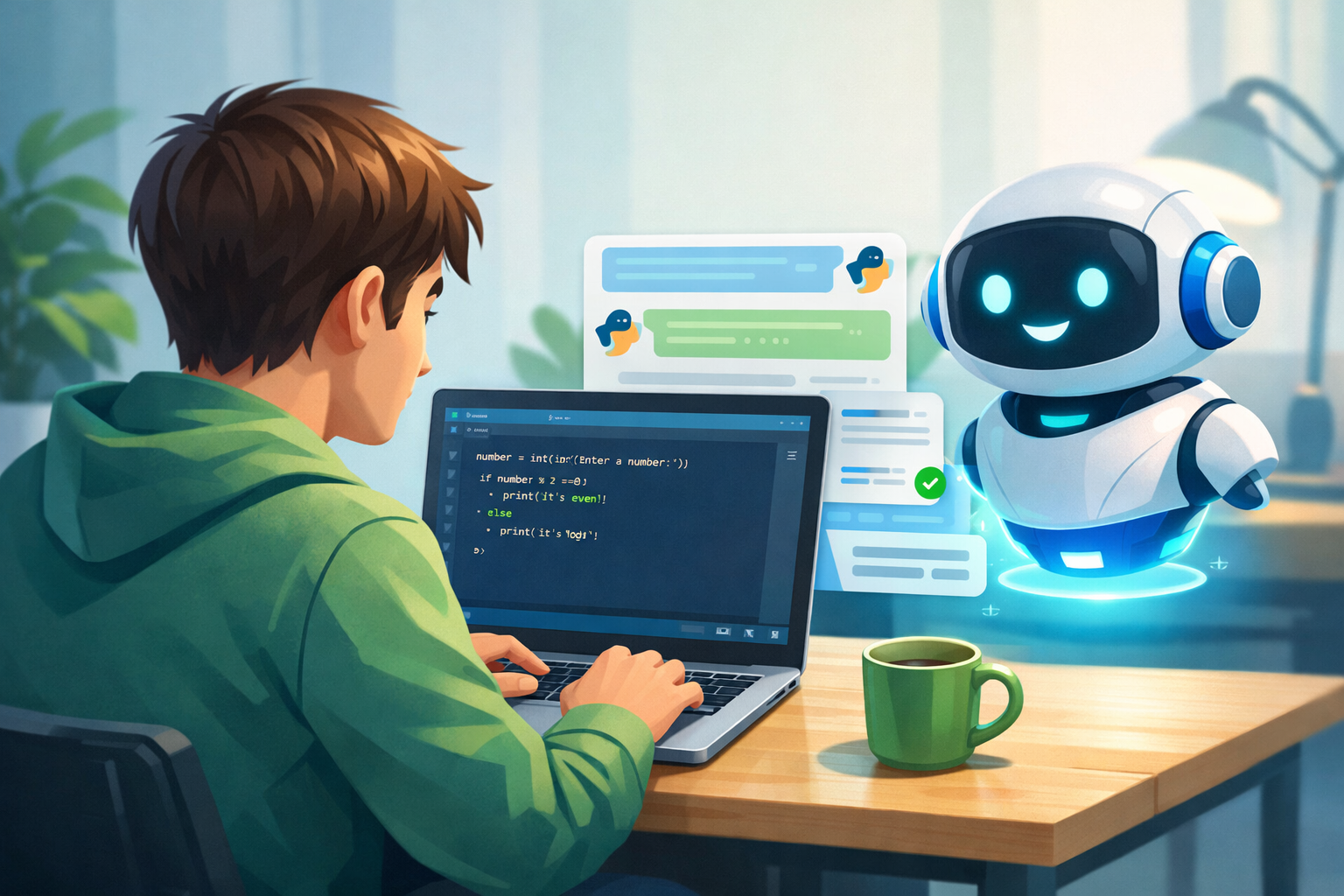
Learning Python can feel confusing at the beginning. You open your code editor, stare at the screen, and wonder what to write first. Maybe you’ve watched tutorials, read articles, or followed courses, yet when it’s time to code on your own, everything suddenly feels heavy. If that sounds familiar, you’re not alone—and that’s exactly where 30 Easy ChatGPT Prompts for Python Coding can change the way you learn.
Instead of guessing what to practice next, you can use clear, simple prompts that guide you step by step. With the right prompts, ChatGPT becomes more than a tool—it becomes a patient coding partner that explains, corrects, and encourages you as you build real Python skills.
Why ChatGPT Prompts Matter for Python Coding
When you learn Python the traditional way, you often jump between theory and practice without a clear bridge. Prompts solve that problem.
With easy ChatGPT prompts for Python coding, you:
- Get instant examples you can run and test
- Learn concepts through practical tasks
- Reduce frustration caused by unclear errors
- Build confidence by seeing results quickly
Most importantly, you stay in control. You decide what you want to learn, and the prompt directs ChatGPT to respond in a way that matches your level.
How to Use These 30 Easy ChatGPT Prompts for Python Coding
Before jumping into the prompts, it’s important to know how to use them effectively.
Simple process you should follow:
- Copy one prompt from the list
- Paste it into ChatGPT
- Run the code it gives you
- Change small parts and test again
Pro tip for better learning
Always add one line at the end of your prompt:
“Explain the code step by step in simple terms.”
This turns every response into a mini lesson designed just for you.
30 Easy ChatGPT Prompts for Python Coding (Organized by Skill Level)
Below are 30 easy ChatGPT prompts for Python coding, grouped so you progress naturally from basics to practical tasks.
Beginner Python Prompts (1–10)
These prompts help you understand the foundations of Python without feeling overwhelmed.
- “Explain Python variables using very simple examples.”
- “Write a Python program that prints ‘Hello, World!’ and explain each line.”
- “Create a Python script that asks for my name and greets me.”
- “Show me how to do basic math operations in Python.”
- “Explain the difference between integers and strings with examples.”
- “Write a Python program that converts user input into a number.”
- “Create a simple Python calculator for addition only.”
- “Explain comments in Python and why they matter.”
- “Write a Python script that checks if a number is positive or negative.”
- “Explain Python errors in a beginner-friendly way.”
These prompts focus on clarity. They help you build a strong base without rushing.
Core Python Logic Prompts (11–20)
Once you understand the basics, these prompts guide you into real logic and problem-solving.
- “Explain if-else statements in Python with real-life examples.”
- “Write a Python program that checks if a number is even or odd.”
- “Explain for loops in Python step by step.”
- “Create a Python loop that prints numbers from 1 to 10.”
- “Explain lists in Python using simple examples.”
- “Write a Python program that stores names in a list and prints them.”
- “Explain dictionaries in Python in simple language.”
- “Create a Python program that counts items in a list.”
- “Explain while loops and when to use them.”
- “Write a Python guessing game using basic logic.”
These easy ChatGPT prompts for Python coding help you think like a programmer, not just memorize syntax.
Practical Python Prompts (21–30)
Now you move into prompts that feel useful in real situations.
- “Write a Python program that reads data from a text file.”
- “Explain how to write data to a file in Python.”
- “Create a Python script that renames files in a folder.”
- “Write a simple password generator in Python.”
- “Explain functions in Python with clear examples.”
- “Create a Python function that calculates the average of numbers.”
- “Write a Python script that removes duplicate items from a list.”
- “Explain how Python handles errors using try and except.”
- “Create a small Python project idea for beginners.”
- “Review my Python code and suggest improvements.”
By the time you reach these prompts, Python starts to feel practical instead of abstract.
Prompt Ingredients Table (Think Like a Recipe)
Using a prompt is like cooking. When you mix the right ingredients, the result improves.
| Prompt Ingredient | What You Should Include |
|---|---|
| Skill level | Beginner or intermediate |
| Task | What Python should do |
| Limits | No libraries, simple logic |
| Output | Code + explanation |
When you structure prompts this way, ChatGPT gives you clearer, more helpful answers.
Common Mistakes You Should Avoid
Even with the best 30 easy ChatGPT prompts for Python coding, mistakes can slow you down.
Avoid these habits:
- Copying code without understanding it
- Using vague prompts
- Skipping explanations
- Practicing without testing
Better approach:
- Ask “why” often
- Modify code slightly
- Break scripts on purpose to learn from errors
Mistakes are part of learning, but repeating the same ones isn’t necessary.
Best Practices to Learn Python Faster with ChatGPT
To get the most value from these prompts, you should follow a simple routine.
Smart learning routine:
- Practice 30 minutes a day
- Use 2–3 prompts per session
- Rewrite the code yourself
- Save useful prompts for later
Prompt upgrade tip:
Instead of saying “Write code”, say:
“Write beginner-friendly Python code and explain every step.”
That small change improves learning dramatically.
Frequently Asked Questions (FAQ)
What are the best ChatGPT prompts for Python coding beginners?
The best prompts are short, clear, and focused on one concept at a time—exactly like the ones in this list.
Can you learn Python only using ChatGPT prompts?
You can learn a lot using prompts, especially when combined with practice and experimentation. They work best as a hands-on guide.
How often should you practice with easy ChatGPT prompts for Python coding?
Daily practice, even for 20–30 minutes, gives better results than long sessions once a week.
Are these prompts suitable if you have no coding background?
Yes. These 30 easy ChatGPT prompts for Python coding are designed specifically for beginners.
Conclusion: Start Coding with Confidence Today
Python doesn’t become easy by magic—it becomes easy when you practice the right way. With 30 Easy ChatGPT Prompts for Python Coding, you remove confusion and replace it with clear direction. Each prompt helps you learn, test, and grow at your own pace.
Now it’s your turn.
Pick one prompt today, run the code, and change something small. That single step is how real learning begins.
If you found this helpful, save the article, share it with others, and keep practicing. Your Python journey starts with the next prompt you type. 🚀